"THE GRANDDADDY OF THEM ALL"

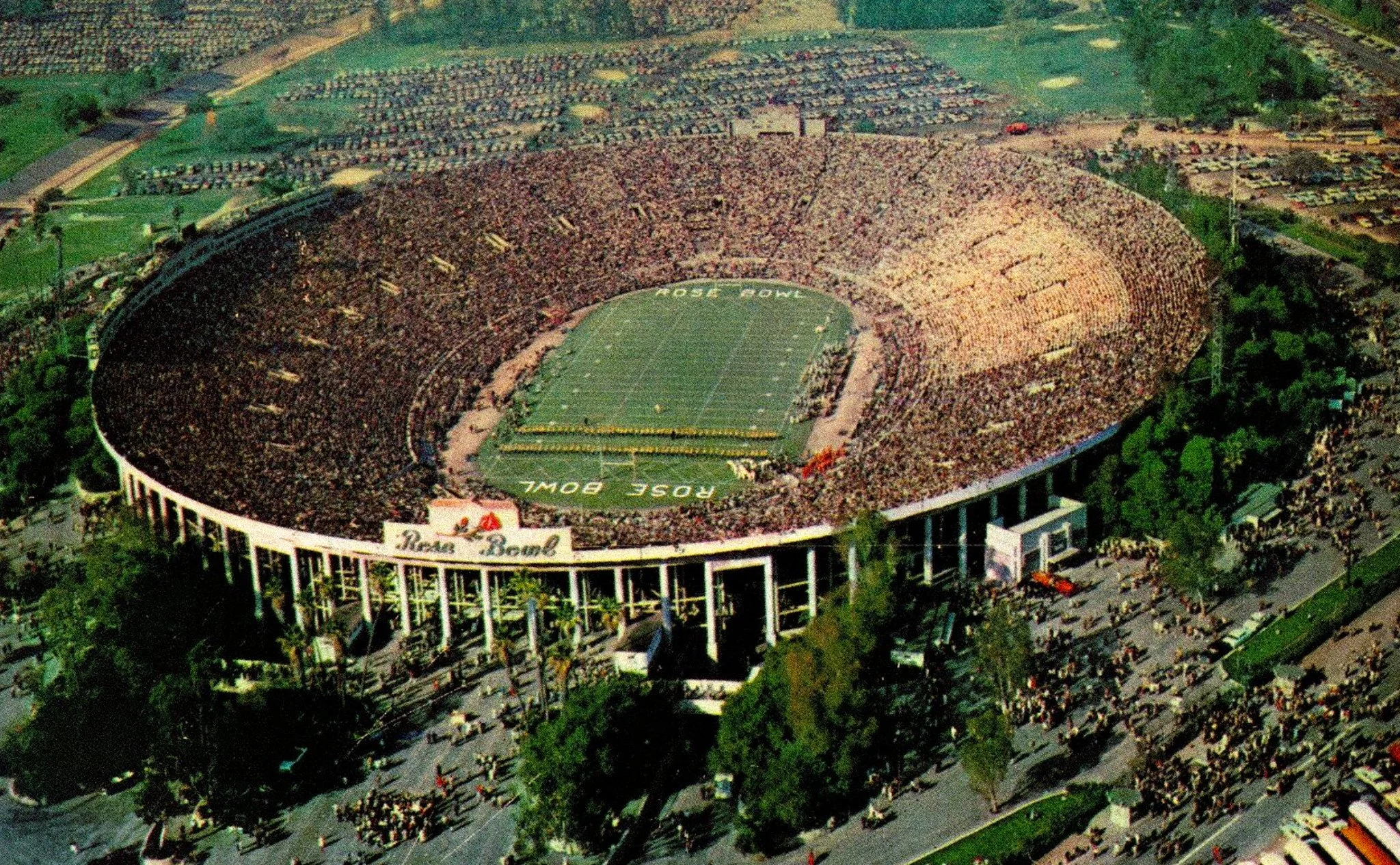
When people speak of The Granddaddy of Them All, they aren't just referencing a football game; they are describing a pilgrimage to an American cathedral. Nestled in the Arroyo Seco of Pasadena, the Rose Bowl Stadium remains one of the most storied venues in the history of global sport. It is a place where geography, architecture, and tradition converge to create an atmosphere that feels remarkably unchanged by the passing decades.

Designed by Myron Hunt and modeled after the Yale Bowl, the stadium opened its gates in 1922. Its iconic horseshoe shape was eventually closed in 1928, creating the massive, continuous bowl that provides its name.

What makes the Rose Bowl unique in the modern era is its structural honesty. In a world of glass-and-steel "smart" stadiums, the Rose Bowl is a testament to the durability of concrete and the elegance of the open air. Its low-slung profile allows the surrounding San Gabriel Mountains to serve as a natural backdrop, creating a "visual syllabus" of Southern California beauty that no high-definition screen can replicate.

The event itself is a cornerstone of American cultural history. Long before it became a postseason fixture, the Tournament of Roses was a way for Pasadena to showcase its “Mediterranean” climate to the rest of the country. The game is the centerpiece of a day-long ritual that begins with the floral artistry of the Rose Parade and culminates in the late-afternoon light that has become legendary among photographers and fans alike.

There is a specific quality to the "Golden Hour" at the Rose Bowl. As the sun begins to dip behind the canyon walls during the third quarter, the field is bathed in a warm, amber glow that signifies more than just a change in lighting—it signals the peak of the college football season.
In an age of disposability, the Rose Bowl Stadium stands as a monument to permanence. It is a reminder that some things are worth preserving precisely because they cannot be improved upon. Today, in addition to its sporting event hosting, the Rose Bowl is home to one of the best flea markets in the country. Buyers from many large brands including Ralph Lauren, Levi Strauss, send teams out to locate the best vintage pieces used to inspire new designs.

Happy New Year.

THE ROOF OF THE WORLD - 1953

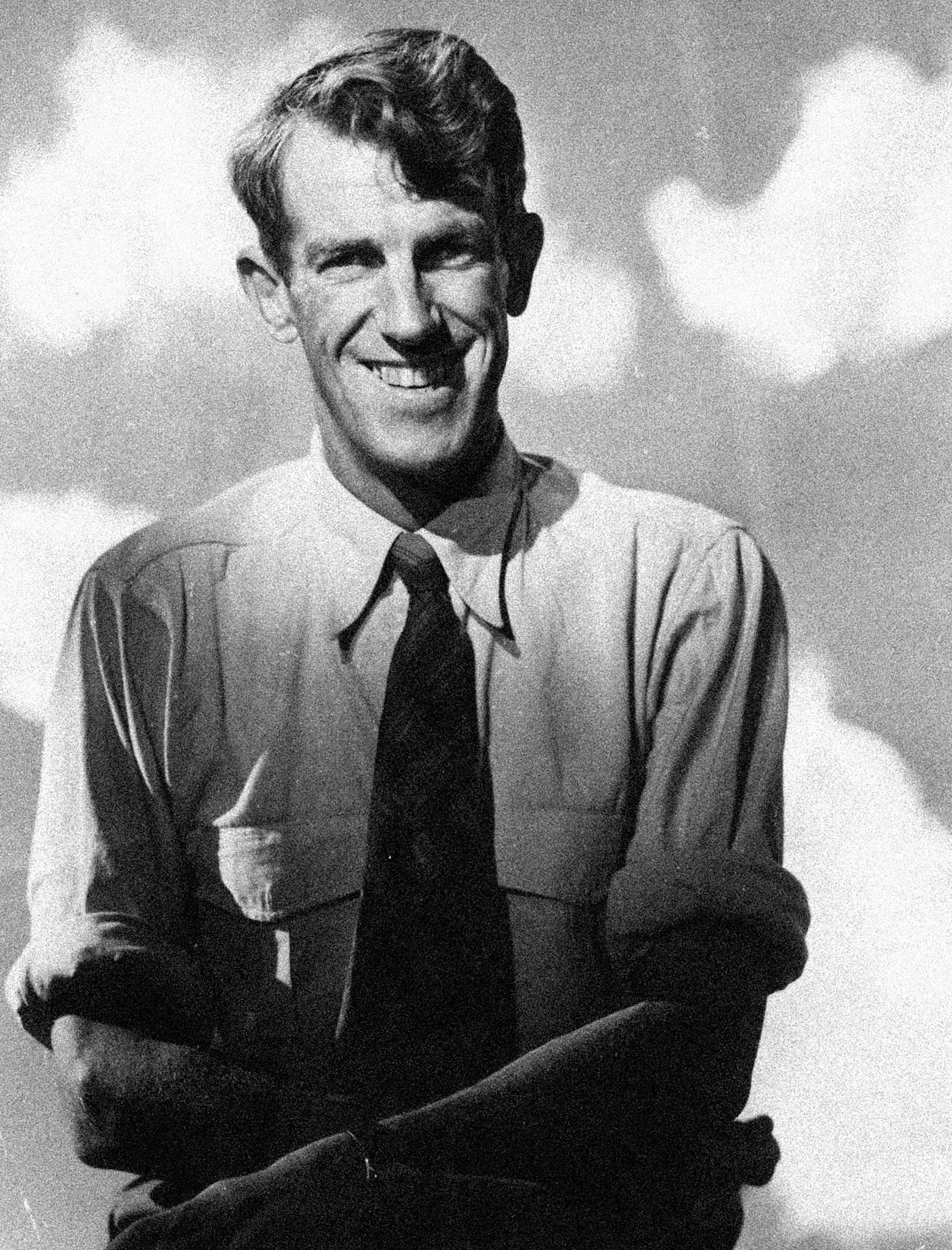
The ascent of Mount Everest by Sir Edmund Hillary in 1953 (although in 1953 he was not yet a sir) was not merely a feat of mountaineering; it was the closing of a chapter in the history of global exploration. At the center of this narrative was a soft-spoken beekeeper from New Zealand whose physical durability and quiet resolve became the blueprint for the modern adventurer.

Hillary in a three-button tweed jacket, at an appearance with Sherpa Tenzing following the expedition. Getty Images

By the early 1950s, Everest had attained the status of a "Third Pole"—the last great terrestrial prize. Previous expeditions had been defeated by the sheer logistical weight of the mountain and the physiological toll of the "Death Zone." Hillary’s advantage lay in his conditioning. Having spent his youth navigating the Southern Alps of New Zealand, he possessed a lung capacity and a mental grit that were perfectly suited for the thin air of the Himalayas.

In 1953, joining the British expedition led by John Hunt, Hillary found his perfect counterpart in Tenzing Norgay, a Sherpa with unparalleled high-altitude experience. Their partnership was a study in mutual reliance—a refusal to let individual ego compromise the structural integrity of the mission. Towering over the range that is referred to as the “Roof of the World”, Everest measures in at an imposing 29,032ft along the border of China and Nepal. As the tallest mountain in the Himalayas, Everest had tempted mountaineers since the 1850’s.

A look at the intimidating terrain of Everest.

The defining moment of the climb occurred just below the summit at what is now known as the Hillary Step. It was a forty-foot wall of rock and ice that stood as the final sentry to the peak. Hillary’s solution was a masterpiece in motion: he wedged his body into a crack between the ice and the rock, literally shimming his way up the face.

On May 29, 1953, at 11:30 a.m., they reached the summit. There was no grand speech or theatrical display. Hillary simply reached out to shake Tenzing’s hand, though the Sherpa famously opted for a hug. They stayed for only fifteen minutes—just long enough to take photographs and bury a few small offerings in the snow.

Photo Credits, Getty Images

What makes Hillary’s success so enduring is what he did with the fame that followed. He didn't treat the summit as a finish line, but as a foundation. He spent the rest of his life building schools and hospitals in the Himalayas, ensuring that his legacy was tied to the people of the region rather than just the height of the mountain.

Today, Everest is a different landscape, but the Hillary path remains the primary trail to the top. For those who value the intersection of grit and humility, his story is the ultimate syllabus. It reminds us that the most significant achievements are rarely about conquering nature, but about mastering one's own limitations through repetition, preparation, and a deep respect for the environment.

Hillary wore a Rolex ref. 6352, a model that would soon carry a tribute to him in its name; the Rolex “Explorer”.

Birdland

In the humid, summer air of mid-century Manhattan, 1678 Broadway was more than an address; it was the epicenter of a musical movement. Birdland, which opened its doors in December 1949, was named in honor of the man who had already dismantled the traditional architecture of jazz: Charlie "Bird" Parker.

To understand Birdland, you must understand the restless mind of Parker. He was a man who viewed the saxophone not as a instrument, but as a scalpel, and he was a surgeon. Along with Dizzy Gillespie and Thelonious Monk, Parker pioneered “Bebop”—a genre characterized by breakneck tempos, complex chords, and an improvisational vocabulary that demanded an unprecedented level of focus.

The front entrance to Birdland, located at 1678 Broadway Ave, in Manhattan’s Midtown neighborhood.

Parker’s brilliance was rooted in a refusal to be decorative. His solos were lean, jagged, and dense, functioning like a template for a generation of players who wanted to move beyond the predictability of the Swing Era. At Birdland, Parker found a venue that matched the intensity of his output and the appetite of those who attended.

Birdland sat down a flight of stairs, a basement sanctuary that could hold 500 people—though on any given night, it was double that. The layout contained a long bar, rows of tables draped in white linen, and a "bullpen" section where fans could sit for the price of a drink to watch them work.

Parker on the saxophone.

From those who describe it, the club was a masterclass in atmospheric design. It featured a distinct "birdcage" motif and an emcee, the diminutive and high-pitched Pee Wee Marquette, whose introductions became as much a part of the historical record as the music itself. Birdland wasn't just a place to hear music; it was a snapshot from what would become a historic image of post-war New York.

"Greetings From Havana."

In February 1962, the United States was on the precipice of formalizing the Cuban trade embargo. Before the President could put pen to paper on the executive order that would sever ties with the island for decades, he issued a specific, urgent command to his Press Secretary, Pierre Salinger.

The mission was simple but daunting: Kennedy needed as many H. Upmann Petit Coronas as he could find by the next morning. Salinger, a man who understood the "big hello" of Washington life, spent the night scouring every humidor in Washington. When he walked into the Oval Office the following morning and confirmed the successful haul, 1,200 cigars. Kennedy reportedly smiled, opened his desk drawer, and signed the embargo into law.

Kennedy’s choice of the H. Upmann Petit Corona was a reflection of his broader sensibilities, devoid of unnecessary flourish. While many of his contemporaries favored the massive, imposing "Churchill" vitolas, JFK preferred a smaller, unimposing cigar. The Petit Corona offered a refined profile that fit the brisk pace of the man leading the United States through a tumultuous period in history.

Whether he was photographed on the deck of his sailboat the “Honey Fitz” or leaning over a map in the Cabinet Room, the presence of the cigar served as a marker of Kennedy’s composure. It suggested that despite the weight of the world, he could still find a moment for himself.

Jack Kennedy smoking his favorite, H.Upmann Petit Upmann.

A Field Guide to the Birds - Peterson

A gift to my grandfather on the occasion of his 40th birthday. It was given to him by my grandparent’s close friends. He passed away when I was two and a half years-old.

This initial post is a tribute to the faint memories I have of him, as I am now just slightly older than he was when he received this book. I hope he would’ve enjoyed Navigator Archive.

A Field Guide to the Birds was orginally published in 1934.