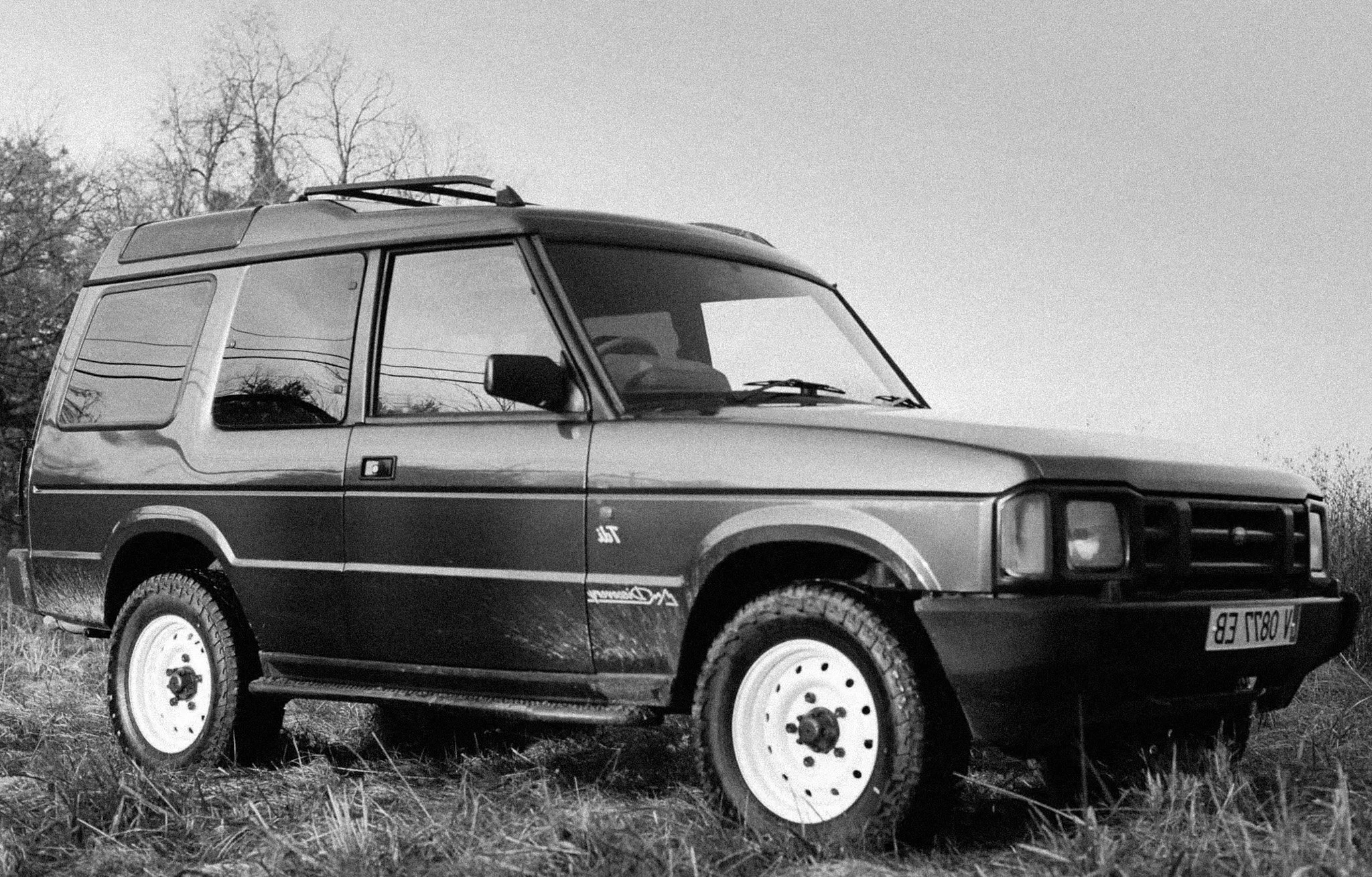
Classic Design of the original Land Rover Discovery

My parents brought us to the Auto Show in Chicago in the 90s, which was memorable as all days in a major US city were for a kid from a mid-size town. I liked cars, but I was much more interested in sports and other typical kid activities. I remember walking around looking at futuristic concept cars that seemingly every automaker at the time had. The 90’s were inevitabley a time of looking forward if for nothing more than the coming of a new millennium in a few years.

Maybe it was from having been raised in a house that had more antiques and original artwork in it than technology. But I was always fascinated by objects that had a classic design ethos. Several decades later I don’t remember the vehicles I saw that day. I do however remember one: the Land Rover Discovery. I remember standing there watching the adventure themed promotional videos at the Land Rover display. I was impressed by the off-road prowess that was shown on the screens around the Land Rover booth.

Photo by Commonwealth Classics

The Discovery navigated through what looked to be the Amazon jungle and the deserts of Africa. One video showed the vehicle passing through a river with water up to the windows. I don’t know if I knew what or who Land Rover was before that day, but I did after.

While many modern SUVs are designed in wind tunnels to look like polished round gems, the Series I and Series II Discovery were penned with a ruler and a vision of exploration.

One of the more defining aspects of the silhouette feature was the stepped roofline. This wasn't a stylistic flourish, it was a functional necessity to provide stadium seating for rear passengers, ensuring everyone had a view of the trail ahead. Stadium seating in a modern SUV is fairly impossible to imagine. That, combined with the "Alpine lights"—thin windows curved into the roof edge—the Discovery felt airy and expansive, a stark contrast to the tight interiors of its peers.

The design philosophy of the 90s-era Discovery was defined by a specific kind of British pragmatism: it was sophisticated enough for the city, but was fundamentally shaped by the wilderness. The Discovery avoided the tough posturing of modern trucks, opting instead for a look that was intellectual and purposeful.

The Business End of the Land Rover Discovery.

The Discovery didn't hide its ruggedness. The exposed hinges on the rear door and the chunky, easy-to-grab door handles (designed to be used while wearing thick gloves) were badges of honor. It was a function influences form philosophy that felt authentic because the vehicle actually possessed the capability its looks promised.

It was this honesty and the refusal to be anything other than a boxy, capable, and thoughtful machine that allowed it to age with more grace than almost any other SUV of its era.

I still get excited when I see one of the few left on the road, out in the wild.

Baseball Road Trips and The Last Summer of the Century

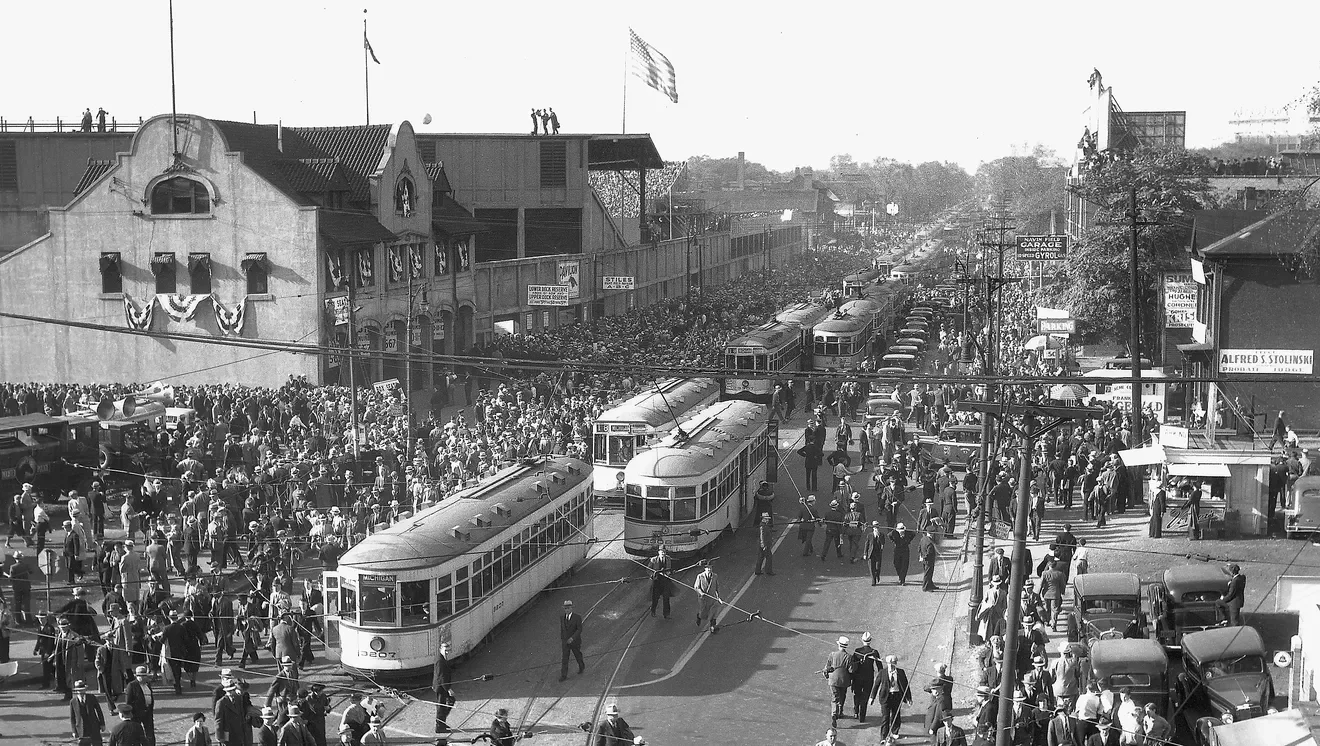
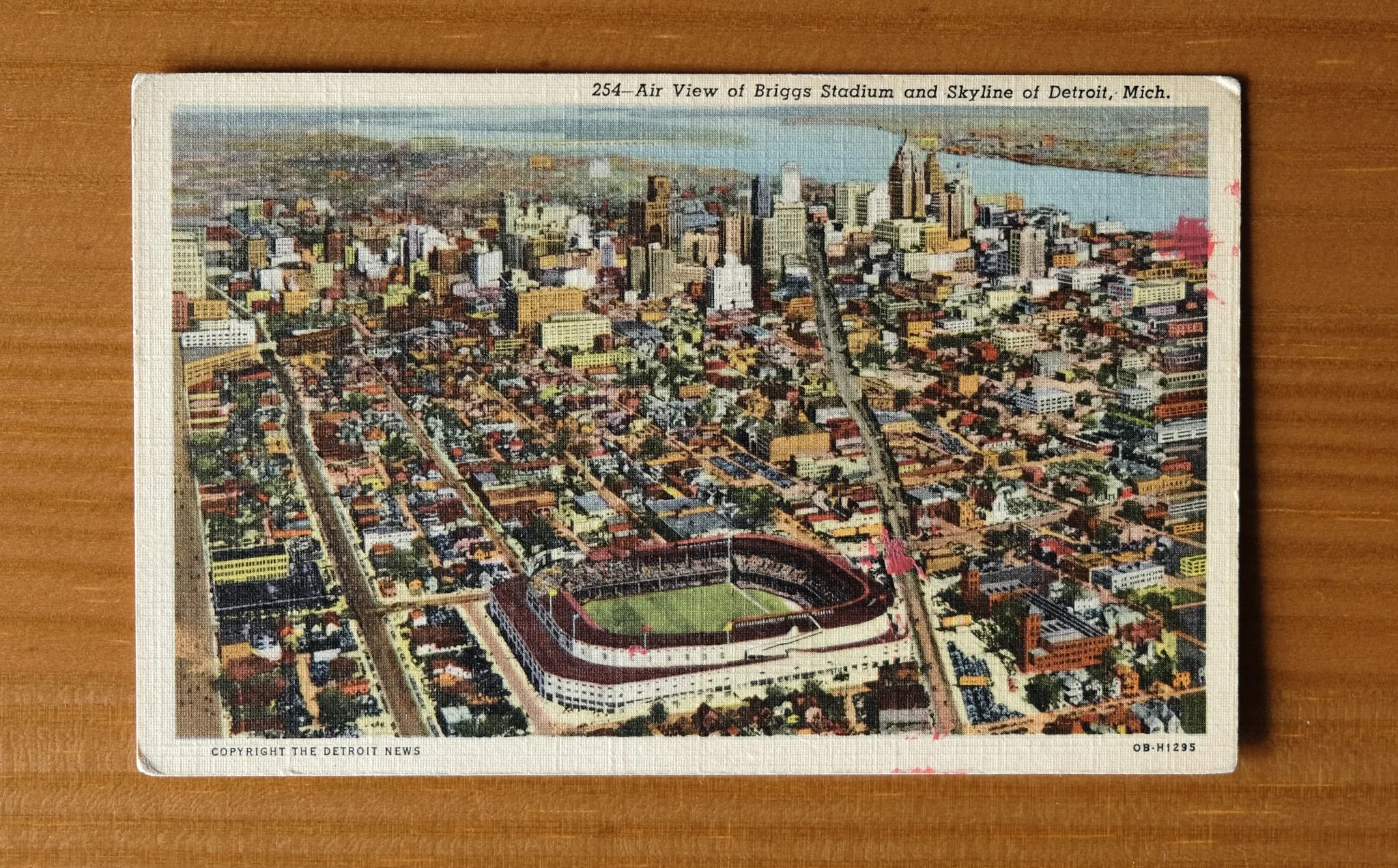
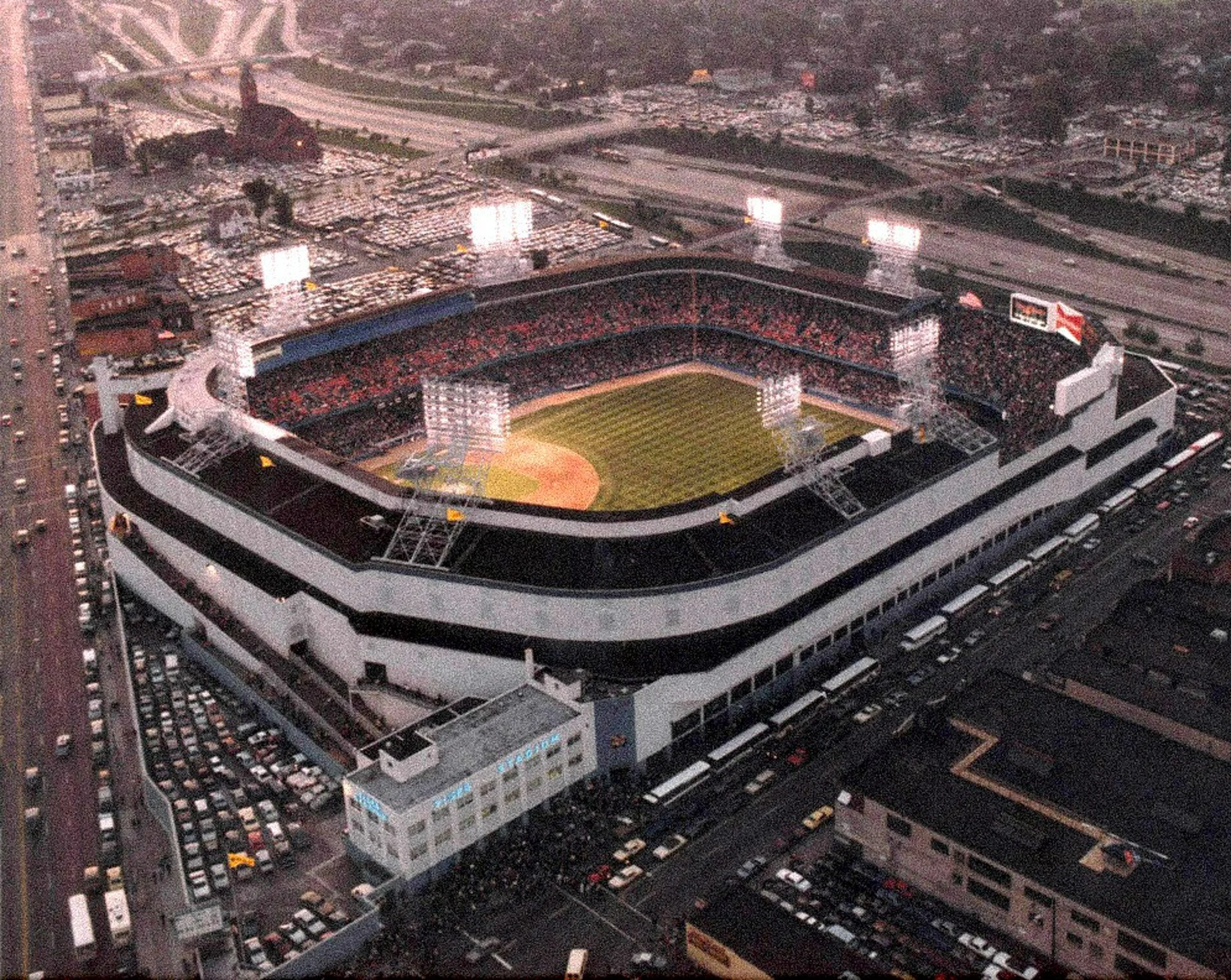
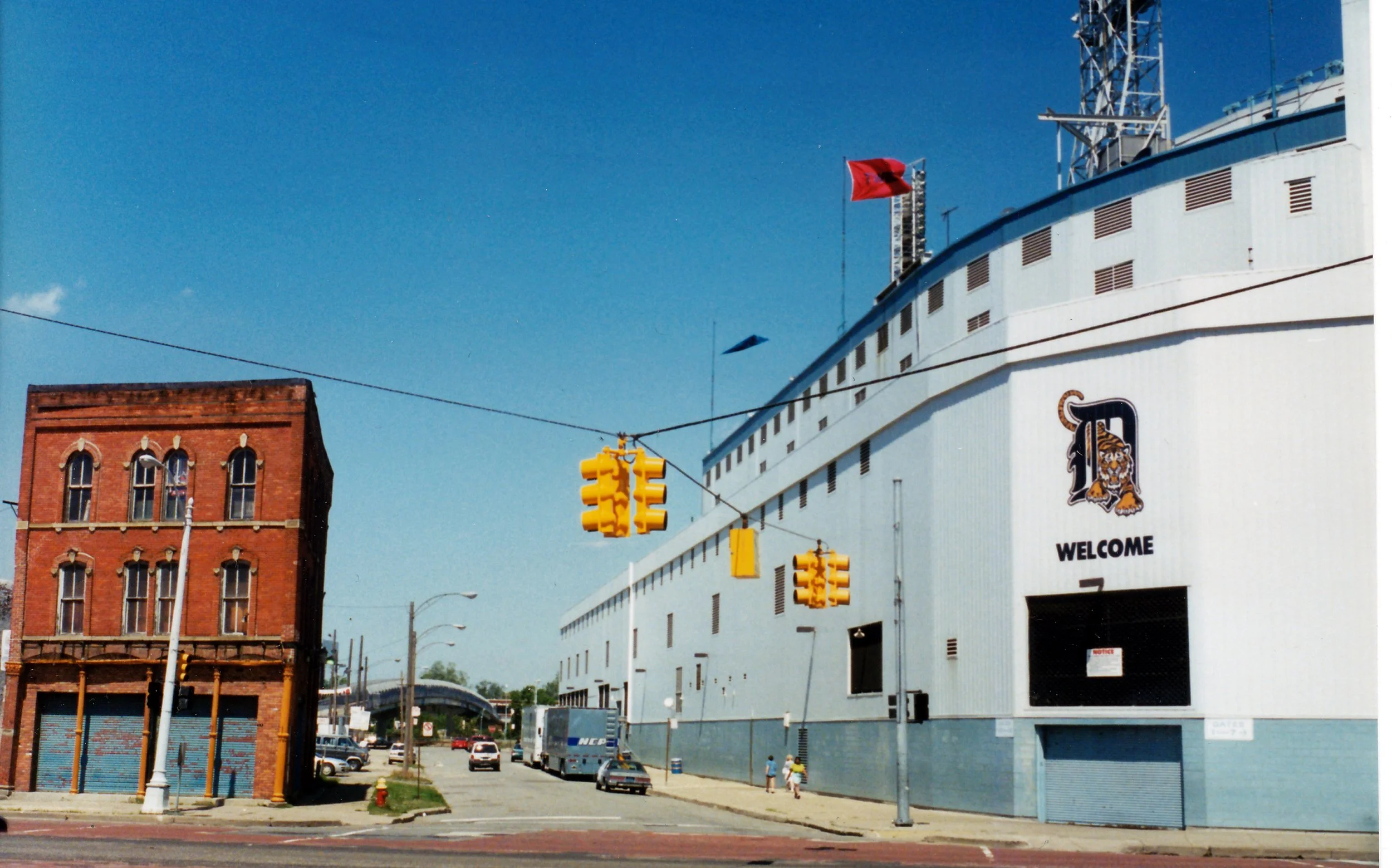
With the coming of spring and beginning of the baseball season thoughts of baseball stadiums of yesteryear enter my subconscious. One of the stadiums that does this most often is old Tiger Stadium in Detroit. The stadium stood just before the western edge of the downtown and was designed in the classic jewel-box style.

Property of the Detroit News

Many stadiums were built using this style, as space was at a premium and stadiums were located in dense urban areas. Teams built parks that worked around the surrounding area instead of buying everything around and leveling it. Tiger Stadium formerly known as Navin Field, Bennett Park, Briggs Stadium was no different. The architecture utilized a double cantilever style that made use of poles and support beams throughout. This meant that the second deck was incredibly close to the field, unlike modern parks. It also meant the entire stadium was fully enclosed without an open back drop of the city behind it.

The intersection of Michigan and Trumbull is a somewhat quiet place now, but for ninety-odd years (1910-1999), it may have been the loudest patch of dirt in Detroit. Tiger Stadium didn't ask for affection; it earned it through a stubborn, industrial utility and nostalgia. It was a place made of steel rivets, dark concourses, and a field that looked impossibly green by midsummer.

As a kid, I was always fascinated by the stadium and liked the look of it in pictures. I always planned to attend a game there. When it was announced that 1999 was the last year the stadium would be in use I knew I had to get to a game. Mid-way through the summer it was now or never. I bought two tickets for a game the last week it was open. This happened to be the final week of September.

Tiger Stadium near twilight. Property of the Detroit Free-Press

My plan was to drive the five hours to arrive at game time, and drive back after the game was over. I was 19 years and one day old and had never been to Detroit, nor made a roadtrip of this distance before. I arrived to the Corktown neighborhood about 30 min before game time. I parked about five or six blocks west near the massive and then abandoned Michigan Central Station. I didn't know then that it was formerly a train station but it was the first thing I saw getting out of the car. I said to the person I went to the game with “that building doesn’t have a window in it.”

Corner of Michigan and Cochrane

Detroit seemed like another world. One I knew very little about and might as well have been the moon. Some 27 years later that night still seems like a dream in my mind. Walking through the then crumbling neighborhood and seeing the stadium that only previously existed to me in pictures was surreal. The late summer golden hour light and the beautifully aged stadium seemed like a Time Machine to baseball’s past.

Thinking back on it now, the stadium and the century were both running on fumes. As was my youth, I look back on all three fondly now.

Haunted By The River - Norman Maclean

Like Norman Maclean I grew up on a river. Unlike him, I didn’t appreciate this blessing until I was much older.

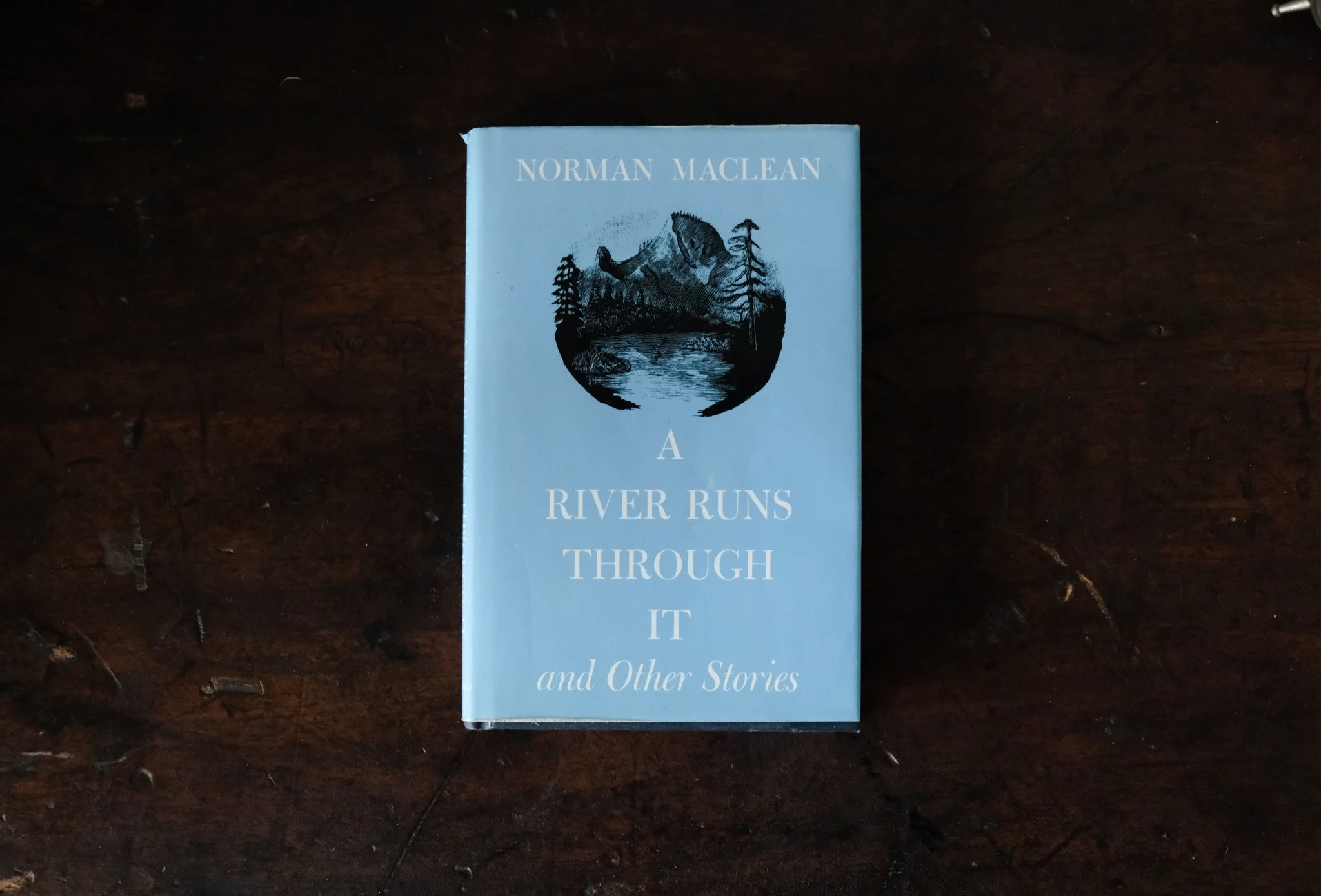
There’s a specific kind of ache that comes with reading Norman Maclean’s A River Runs Through It. It’s not the loud, sobbing kind of grief; it’s the quiet, persistent hum of a Montana river at twilight—the kind that makes you realize you can love someone completely without ever truly understanding them.

Property of Univ. of Chicago.

Maclean’s novella is a masterclass in what stays unsaid. It’s a story wrapped in the technicalities of fly fishing, but at its core, it is a meditation on the limits of our ability to help the people we love most.

From the outset there is much conversation about the four-count rhythm of fly fishing. Maclean writes about the technicalities of the Blackfoot River with a precision that would comparable to that of a watchmaker. But for the Maclean family, fly fishing wasn't a hobby—it was a discipline that was as important as any other element of education.

In their early 1900s family, to fish poorly was to live poorly. To be beautiful on the water was a way of reaching for grace in a young country that, more often than not, handed out tragedy.

The heart of the story is the relationship between Norman, the book’s author and narrator, and his younger brother. Paul was a brilliant fisherman, a charming risk-taker, and a man vibrating with a self-destructive energy that no one in his family knows how to ground.

We all have a Paul in our lives—that person who is undeniably gifted but fundamentally unreachable. Maclean captures the specific agony of watching someone you love drift toward a waterfall and realizing that your hand isn't long enough to save them.

"It is those we live with and love and should know who elude us."

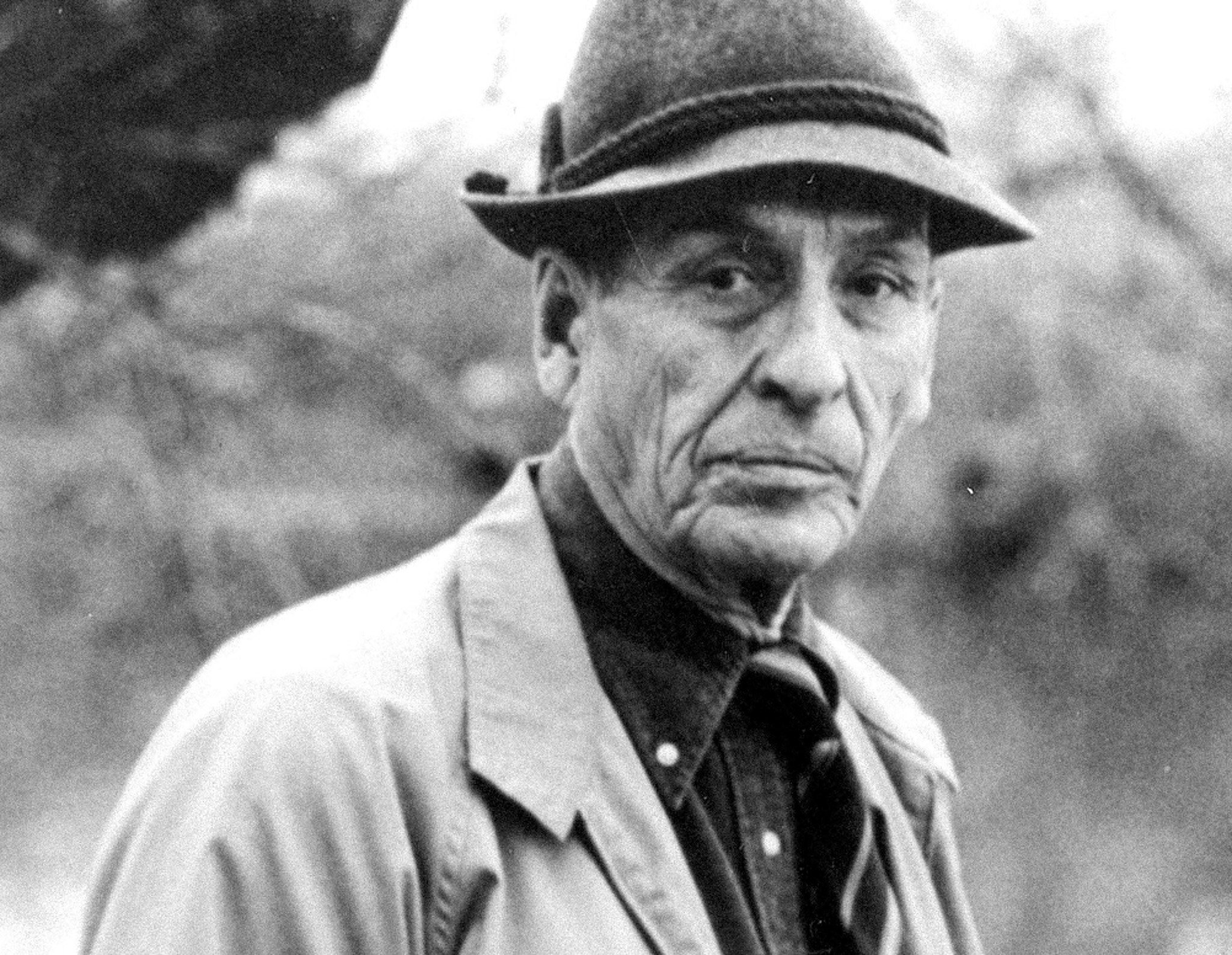
Norman Maclean’s life was defined by a long, quiet wait. Born in 1902 and raised in Missoula, Montana, his early years were split between his father’s strict Presbyterianism and the rugged wilderness of the Rocky Mountains. Before entering academia, he worked for the Forest Service, logging and fighting fires—experiences that gave his eventual writing a physical and calloused authenticity.

For forty years, Maclean was a distinguished professor at the University of Chicago, specializing in Shakespeare. It wasn’t until his retirement in 1973 that he finally sat down to write. His late start meant his words were stripped of ego. It felt like a seasoned woodworker’s final project—sanded down and built to last. He died in 1990, leaving a legacy that proved some stories require a lifetime of living before they are ready to be told.

Decoding the Calculus of John Coltrane

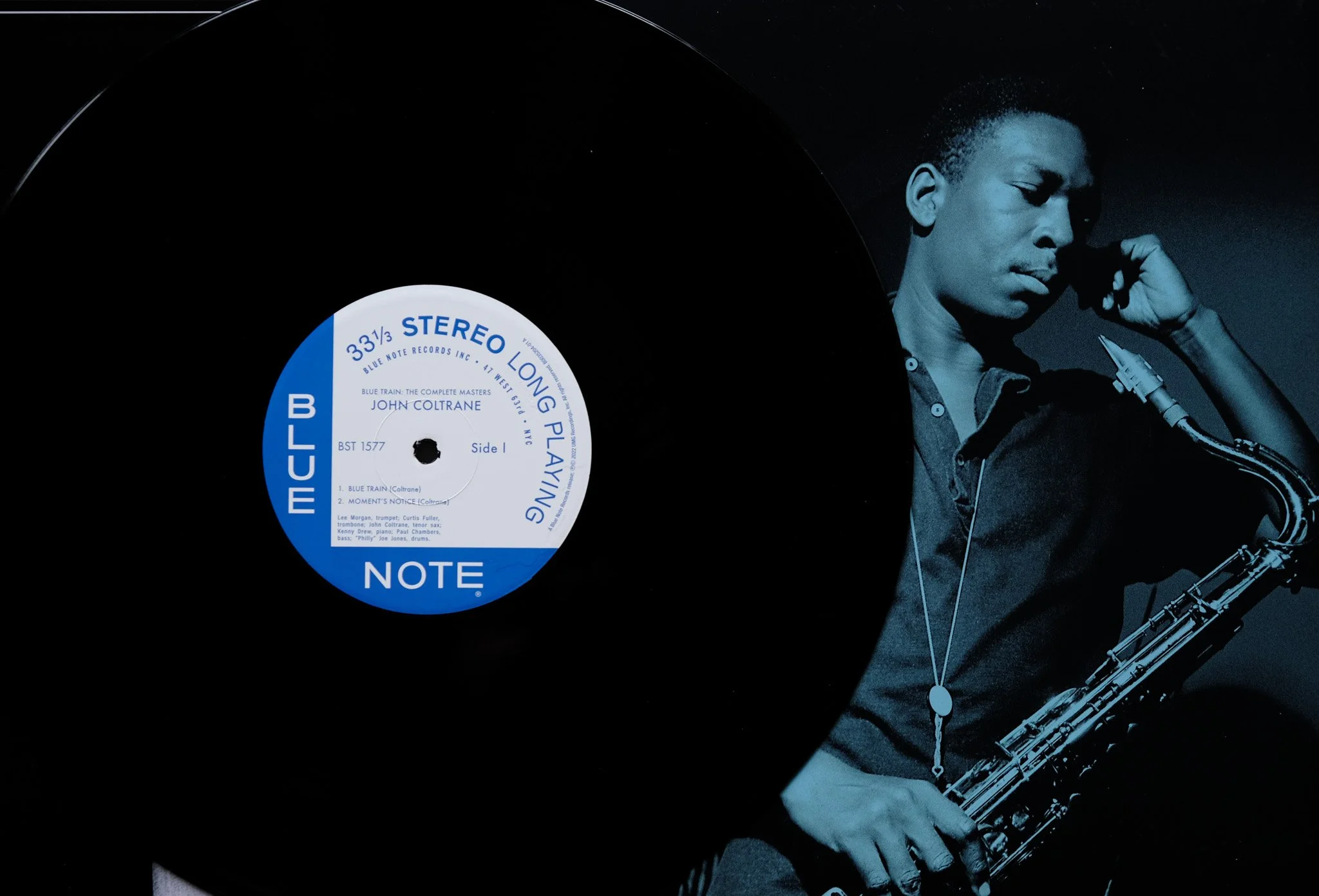
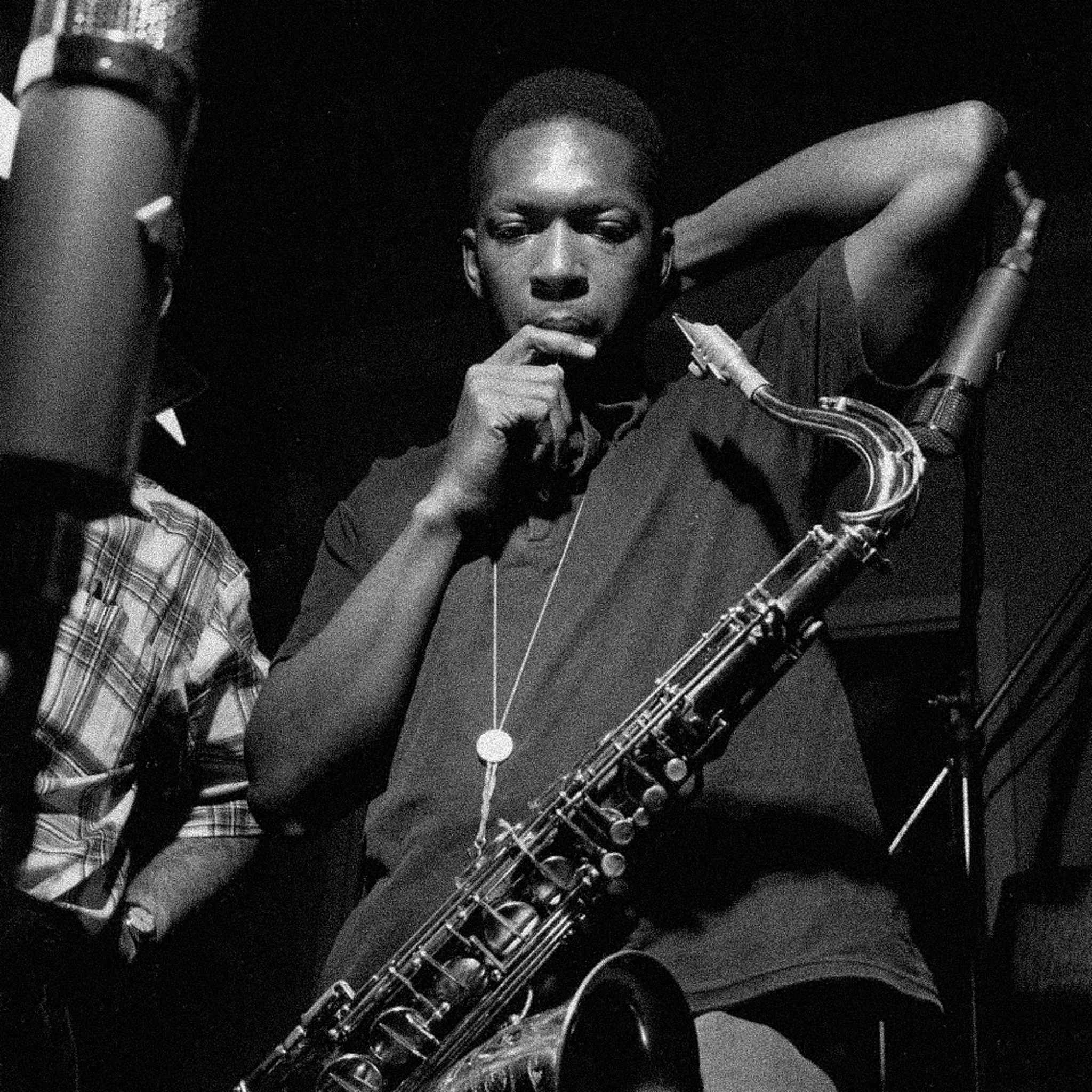
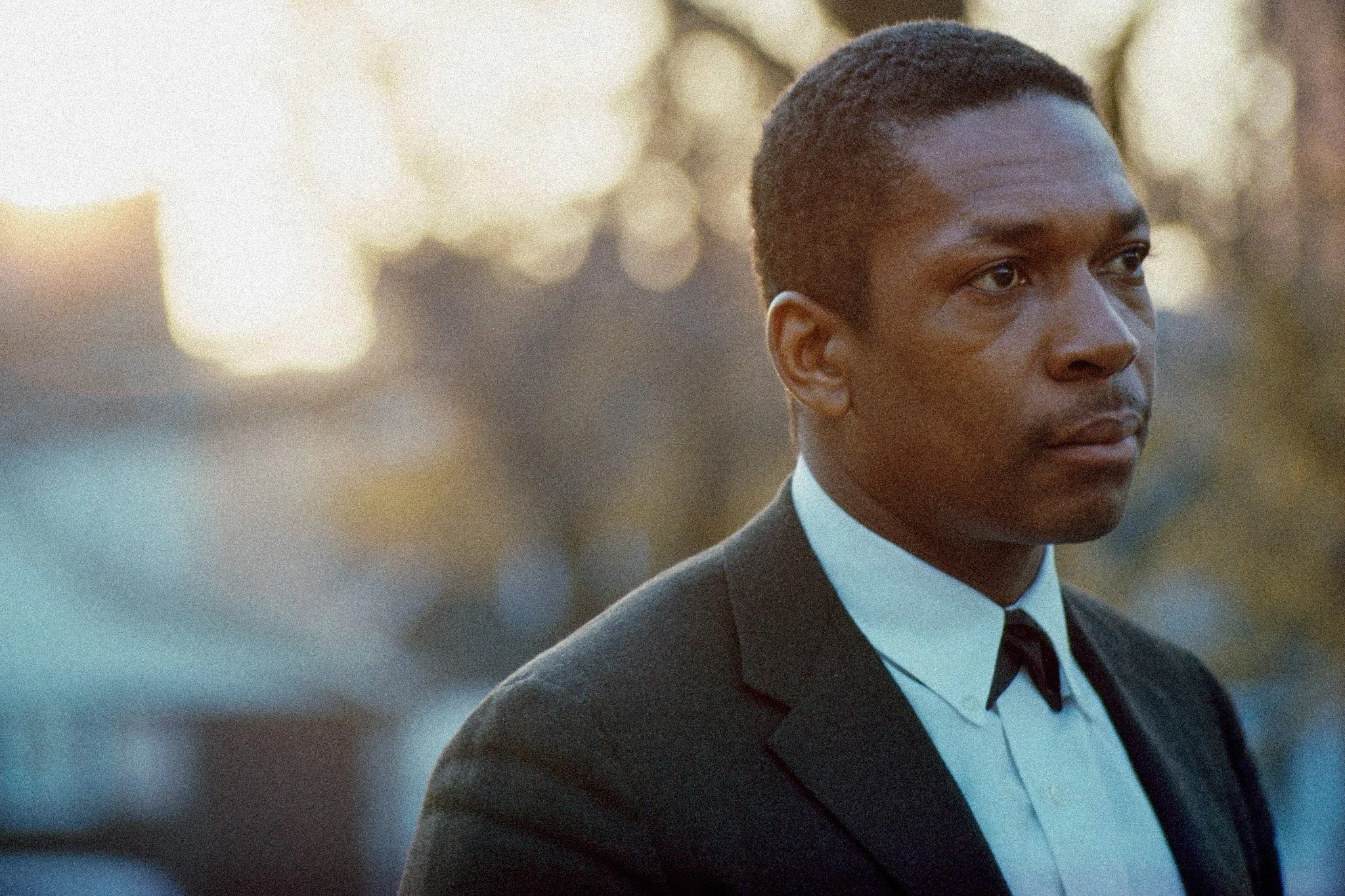
As music goes, there are those who play notes and those who attempt to dismantle the physics of sound. John Coltrane belonged to the latter camp. Almost uniformly referred to as "Trane," he was a person of quiet and scholarly intensity whose evolution from a dependable sideman to a radical musician remains one of the most legendary transformations in jazz history.

Property of Navigator Archive

Listening to Coltrane is to witness a man in a state of rehearsal. He was a musician who viewed the saxophone not as a trophy to master, but as a tool of possibilities. Coltrane is certainly affixed to the Mount Rushmore of Jazz, if one existed.

Photo by and property of Francis Wolff

"I've found that you've got to look back at the old things and see them in a new light." — John Coltrane

Coltrane’s early tenure with Miles Davis revealed to audiences a player who was highly gifted. While Davis mastered the art of the silence between notes, Coltrane seemed intent on filling every gap. No moments left blank. By the late 1950s, this manifested as "sheets of sound"—a dense, style toward improvisation. He would stack chords and scales with such velocity that the melody seemed to blur into a single texture.

Property by and property of Jim Marshall

This wasn't for the sake of applause. It was a technical obsession. In his landmark 1960 album Giant Steps, Coltrane navigated progressions so complex they functioned like a mathematics. He was testing the limits of what the Western twelve-tone scale could endure before it fractured. It makes you wonder if audiences were ready for it, seems they were.

The mid-1960s marked a shift from the technical to the visceral and raw. With the release of A Love Supreme, Coltrane moved away from the "geometry" of hard bop toward a meditative language. The album is considered a masterwork. The music became less about navigating obstacles and more about sustaining a singular, focused intensity.

His late-period exploratory output—often labeled "Free Jazz"—offered with traditional structure entirely. To the uninitiated, these recordings can sound like chaos; to Coltrane, they were an attempt to reach a universal frequency. He was searching for a sound that could express the human condition without the mediation. It was a stripped-back, raw pursuit of truth that prioritized the honesty of the sound rather than polish.

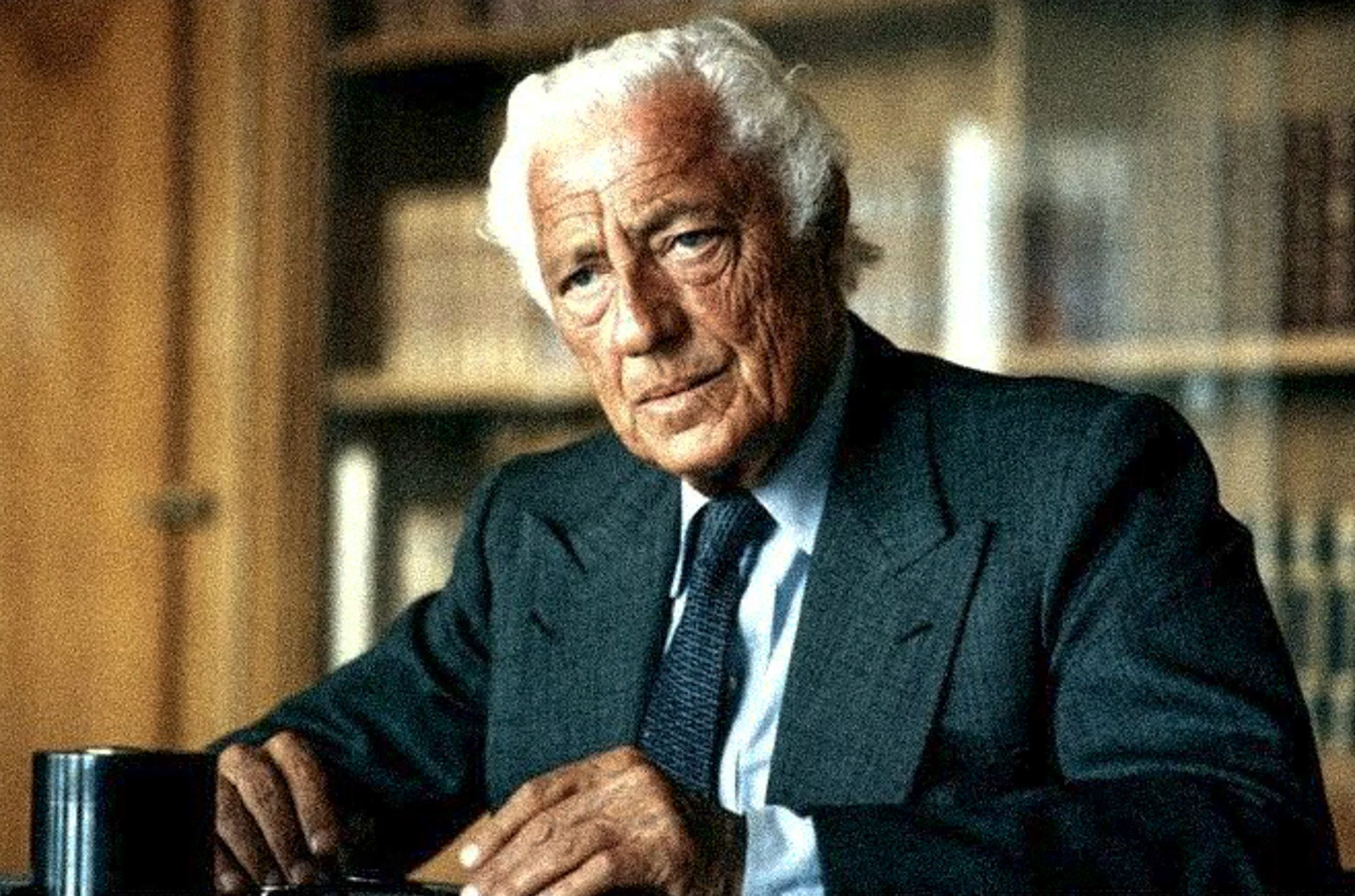
The Timeless Elegance of Gianni Agnelli

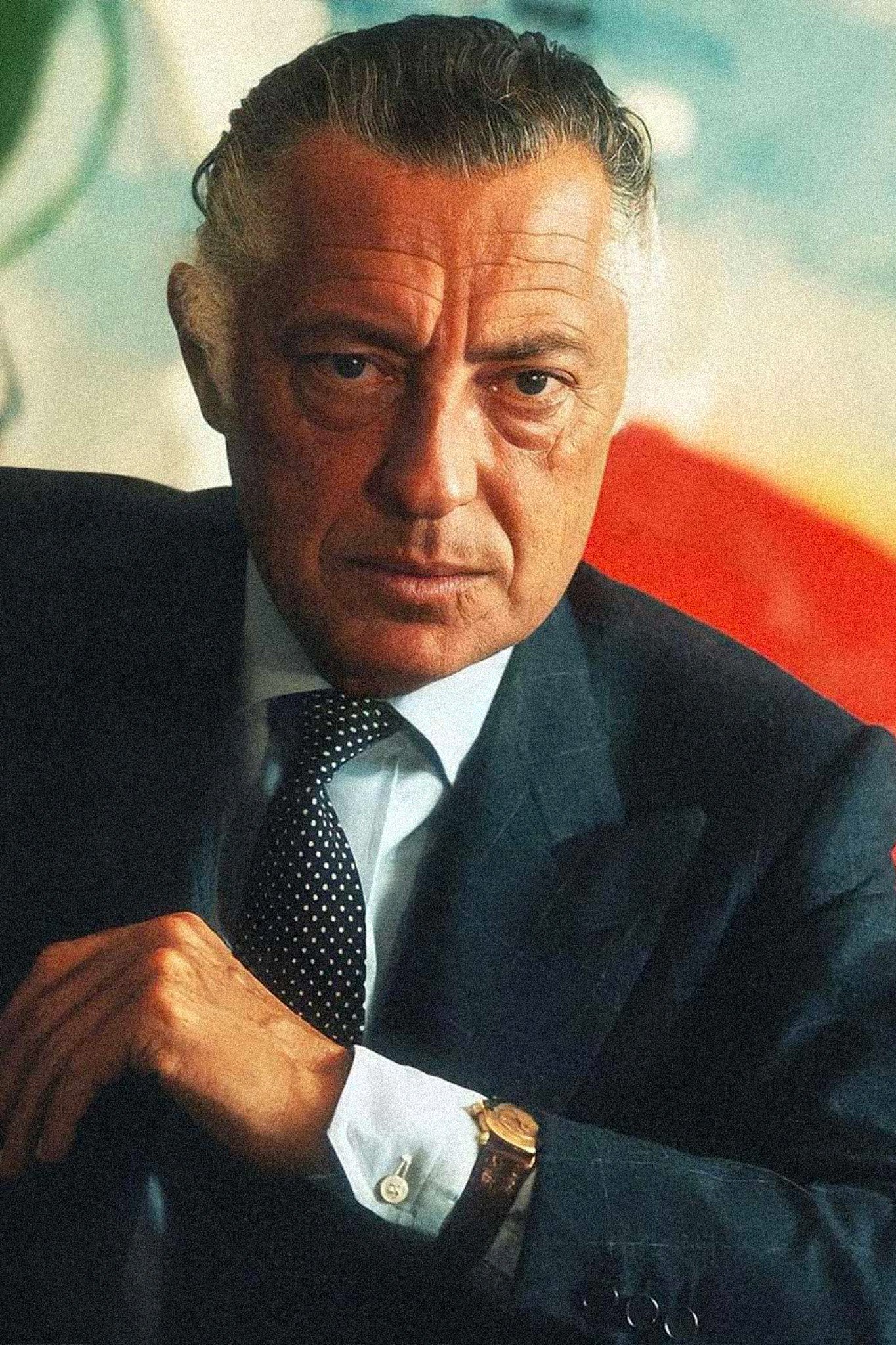
In the mid-twentieth century, while industry was busy building for the future, Gianni Agnelli was busy perfecting the art of living. Known in Italy as L’Avvocato (The Lawyer), the Fiat patriarch didn't just manage an empire; he curated a visual language that remains the gold standard for masculine elegance. He was the ultimate practitioner of sprezzatura—the hard to define, Italian quality of making a unique personal style provocation look entirely accidental.

The most widely published photo of Agnelli. Property of Getty Images

To study Agnelli’s approach is to understand one truth: true dignity doesn't come from following rules, but from mastering them so completely that you can afford to ignore them.

Agnelli’s aesthetic was built on a foundation of bespoke tailoring from London’s Saville Row. He never allowed his clothes to wear him. He possessed a rare and dignified wit that manifested in what many would call studied negligence. And what some would call elegance.

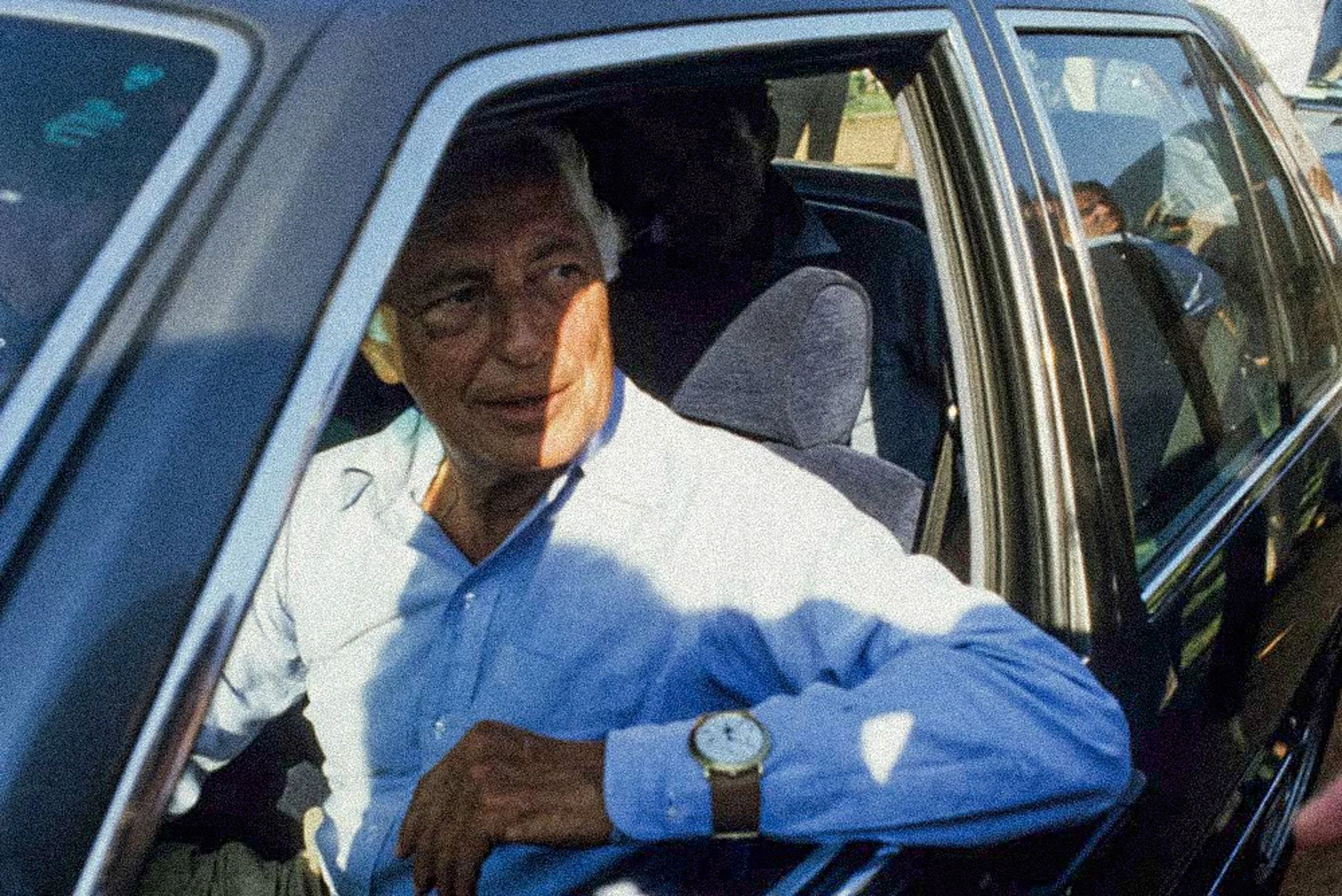
His most famous detail, wearing a wristwatch over his shirt cuff—was an original example of slight rebellion. It made you curious as to if the man’s time was too valuable to be obstructed by a layer of clothing. This eccentric detail showed a disregard for the traditional rules of getting dressed. Another habit of his, leaving the collar buttons of an Oxford shirt undone, or wearing rugged hiking boots with a bespoke suit was a trademark. He proved that a man could be the most compelling person in the room without being rigid.

Property of Getty Images

Beyond the location of his watch, or his occasional preference for denim-on-denim, the core of Agnelli’s style was authenticity. He moved through life with a natural style that made a double-breasted suit look as comfortable as a second skin. He understood that clothing was the background for his personality and character. A reflection of his travels, his preferences, and his passions.

An aging Agnelli. Property of the Agnelli Estate

For the contemporary man, the lesson isn't about copying the quirks. It is about the courage to be oneself. He showed us that style is a byproduct of confidence; that a tie draped over a pullover or a slightly rumpled linen jacket can be more sophisticated than the most sharply cut tuxedo. Only provided it is worn with a straight back, sharp mind, and charasmatic charm.

None of it however works without well-made and well-fitting garments. And none of it looks good without a rather outsize level of self-assuredness either.

100 Years of the Winter Olympics

The activity of traditionally winter sports is one of crisp pine air, biting mountain wind, and features athletes who voluntarily travel down ice chutes at 90 miles per hour. While many sports traditions are centuries old, the history of the Winter Olympics transformed backyard winter pastimes into a global obsession during the 20th century.

In the early 1900s, people in colder climates—especially in Scandinavia—felt that the world was missing out on the true beauty of sport. They had their own regional events but they wanted a grander platform to showcase what they could do on skates and skis. There was a growing realization that winter sports were not just local hobbies but disciplines that required courage and skill. The hope was to create a dedicated stage where the mastery of cold weather sports could be celebrated on a larger scale.

Property of the IOC

In 1924, a "Winter Sports Week" was held in Chamonix, France. At the time, it was an experimental gathering nestled beneath the peaks of the Alps. It was such a hit—with 16 nations competing in things like bobsled and down-hill skiing — that it was in retrospect recognized as the very first Winter Olympic Games. The first ever gold medal was won by an American speed skater, who probably didn't realize he was kicking off a century of tradition in that Alpine town.

As the decades passed, the Winter Games established a rhythm and the world began to take notice. In the 1960s, television turned skiers like Jean-Claude Killy into household names, bringing the thrill of the slopes into living rooms across the globe. The Summer and Winter games were typically held in the same year. Eventually, the games reached a level of popularity that demanded their own unique slot on the calendar. In 1994, the schedule shifted to ensure the Winter Games had their own dedicated spotlight. The 1994 Lillehammer Games in Norway became a landmark event, remembered as some of the most beautiful games ever held.

Italian athletes at the 1956 Games in Cortina. Property of Getty Images

It isn’t just the sports; it’s the sheer scale. We have seen a massive evolution in technology, moving from wooden skis and leather boots to carbon-fiber bobsleds and aerodynamic suits developed in wind tunnels. Whether it’s a legendary hockey game or the grace of a well-executed downhill run, the games offer a unique brand of tension and beauty that only ice and snow can provide.

Property of the IOC