The Life and Times of F. Scott Fitzgerald (Part 1)

Francis “Scott” Fitzgerald was born in St. Paul Minnesota in September of 1896. In a few weeks I will be older than he was when he died. I also share the same birth week as he did. I wonder if he celebrated his birthdays. Although he seemed like the type to celebrate all occasions both large and small.

The years before the light turned green on the Buchanan dock were a restless sequence of cold train platforms and the smell of wet wool in midwestern winters. Before the jazz grew loud and the invitations became ubiquitous, F. Scott Fitzgerald was a young man haunted by the suspicion that he was standing on the wrong side of a very high, very gilded fence.
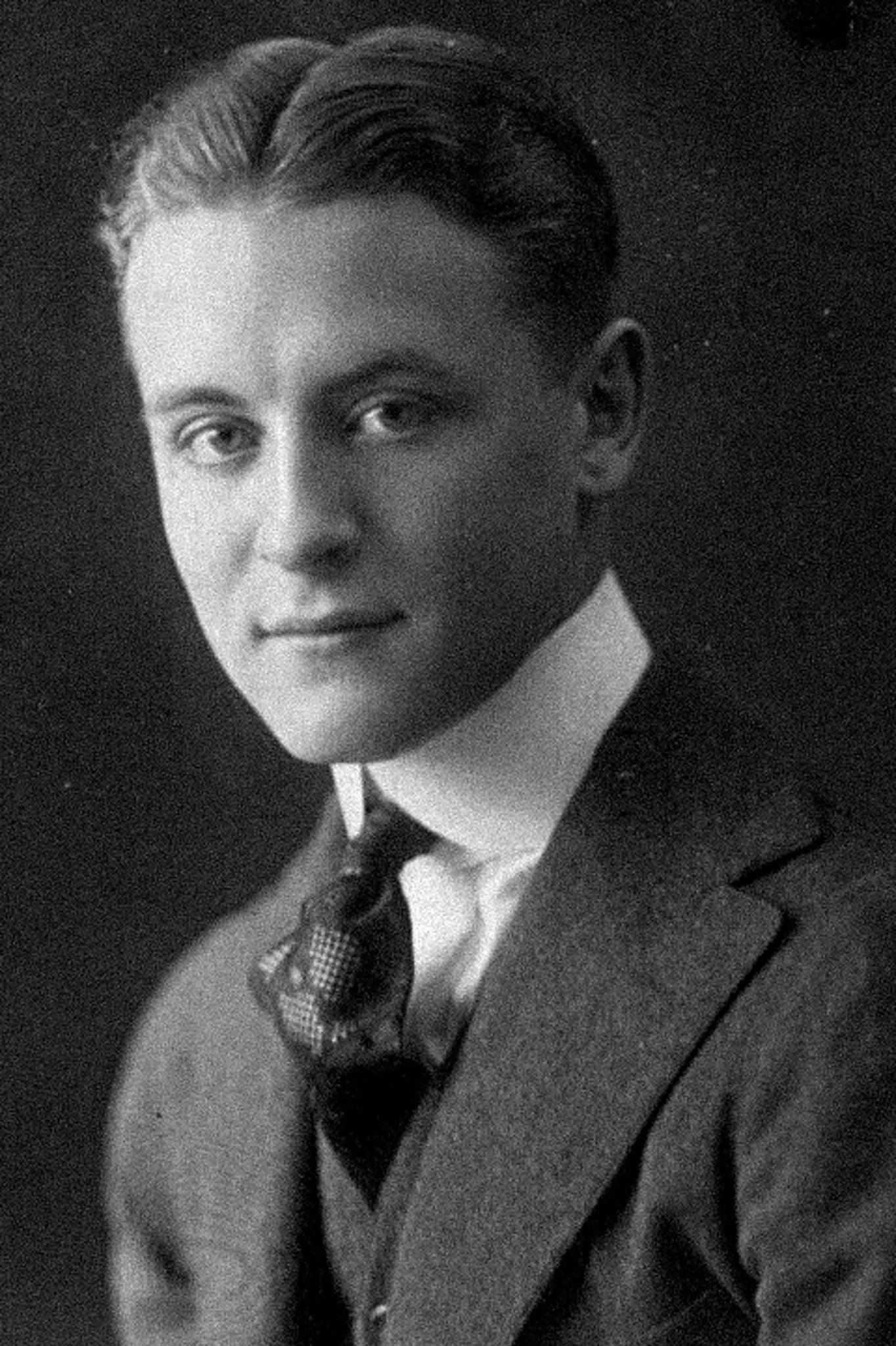
Photo property of Fitzgerald estate.

In the vaulted halls of Princeton, the boy from St. Paul discovered that the world was partitioned by more than just intellect. It was here that the "calculus of class" first began to gnaw at him. He was a creature of kinetic ambition, spending more time composing lyrics for the Triangle Club than studying the classics he was meant to master. He was learning, instead, the posture of the elite—the specific way a tie should hang, the casual cadence of a voice that had never known the indignity of a budget. But the grades slipped, and the war loomed, and the ivory towers eventually receded in the rearview mirror of a troop train.

At Princeton, Fitzgerald didn’t just study history; he tried to wear it. Entering the gates in 1913, he found himself in a Gothic landscape that seemed designed to remind a middle-class boy from Minnesota exactly where he stood. It was a world of "eating clubs" and social pedigrees, where the air was thick with the scent of old money and woodsmoke.

It was during these years that the foundational chip on his shoulder was carved. He was surrounded by the "leisure class," young men who moved with a casual, inherited grace that he had to meticulously rehearse. He later described himself during this time as a terrible bridge-player and a mediocre athlete, constantly overcompensating for a lack of blue-blooded lineage with a surplus of charm and prose.
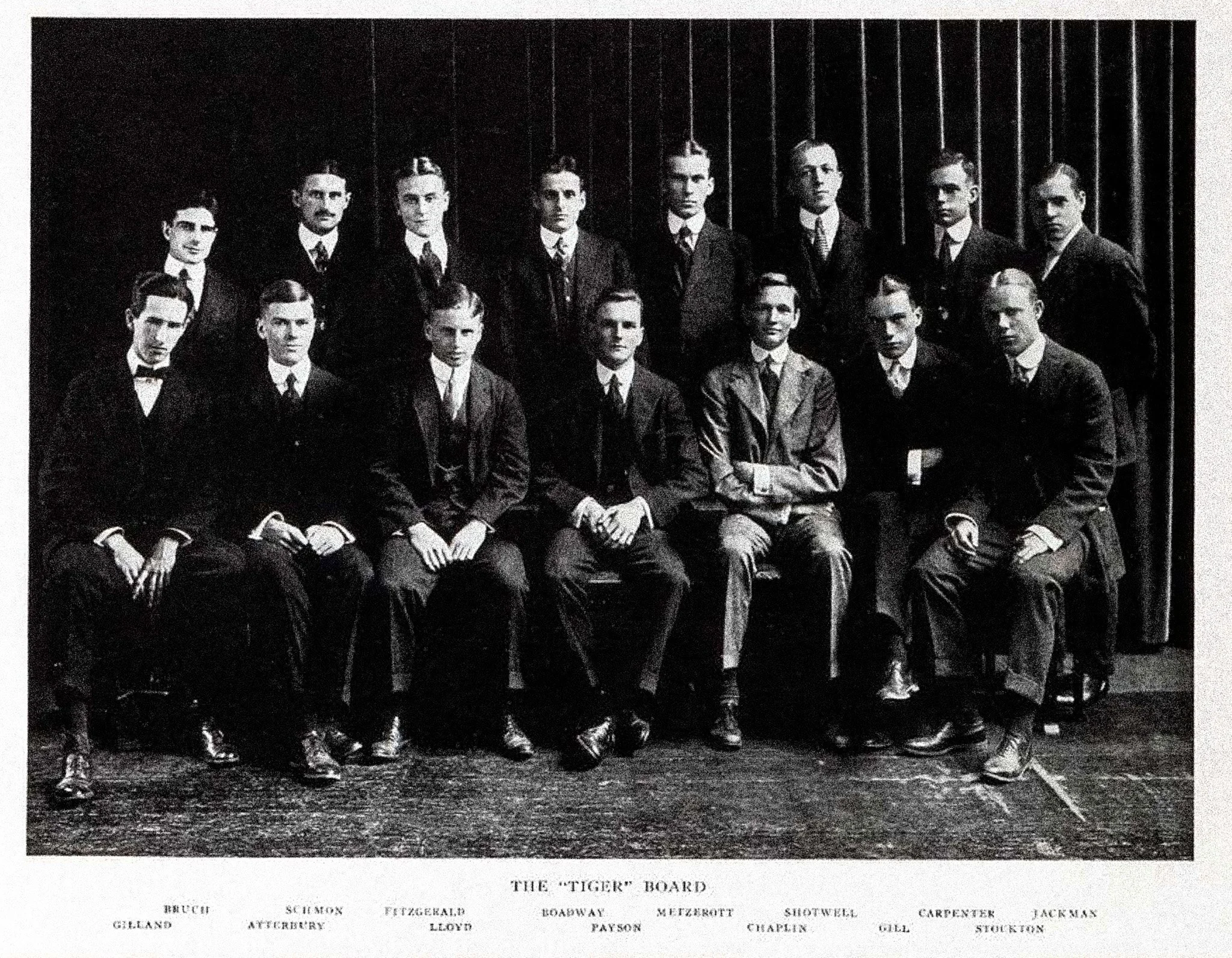
Photo property of Princeton University 1917

The romanticism eventually hit the hard wall of reality. By 1917, the combination of poor health and failing marks forced him to withdraw. He didn't graduate with his class; instead, he traded the cap and gown for the olive drab of an Army uniform. He left Princeton with a trunk full of rejection slips and the early drafts of what would become This Side of Paradise, having learned the most expensive lesson the Ivy League could offer: that the most beautiful things in the world are often the most exclusive. having done well in school, despite attending and subsequently dropping out of Princeton University, some 85 years after his death, he remains an enigma. We can never fully understand his genius nor his inner torment.

Fitzgerald’s exploits have been well documented, but it is not as well-known that he was named after Francis Scott Key, who was a distant cousin. Fitzgerald is also credited with the first use of the word “t-shirt”, used in the novel “This Side of Paradise”.

8 1/2 - Fellini (1963)

By 1963, Federico Fellini was a man under immense pressure. Having achieved global acclaim with La Dolce Vita, the world was waiting for his next move. The problem was that Fellini didn't have one. He famously sat in his office at with a blank piece of paper, having forgotten what kind of film he wanted to make. Instead of retreating, he decided to film the forgetting itself.

The protagonist, Guido Anselmi played with a weary, cool detachment by Marcello Mastroianni, is a director trapped in a vacuum. He is surrounded by producers demanding a script, actresses demanding a role, and a wife demanding the truth. Guido’s solution is to retreat into the architecture of his own memory.

Property of Janus Films.

What makes 8 ½ so enduring is its refusal to signal when it is moving from the present day into a dream. One moment Guido is at a sterile health spa, and the next he is a child being bathed in wine at an Italian farmhouse, or facing a "harem" of all the women from his past.

The film's title itself is an insider reference: Fellini had previously directed six features and two "half" features (collaborations). This was his Eighth and 1/2. It is a work of radical honesty, suggesting that our lives are not a linear sequence of events, but a cluttered archive of fantasies, guilts, and half-remembered faces.

Property of Janus Films.

To understand Fellini’s 8 ½ is to understand the terrifying moment when the fountain of ideas simply stops. It is less a movie about cinema and more a study of the creative block elevated to the level of a grand, operatic circus.

The film functions like a memory palace with no doors. It moves without warning from the stark, clinical reality of a 1960s hotel into the warm, dusty corners of an Italian childhood. There is no distinction made between a conversation with a mistress and a hallucination of a long-dead father.

This is the brilliance of the Felliniesque style: the recognition that our internal lives are a cluttered archive. We are constantly negotiating with our past selves, our failures, and our fantasies. The film captures the specific weight of mid-century Italian life—the heavy influence of the Church, the allure of the cinema, and the impossible standards of the "Latin Lover" archetype—and tosses them all into a blender.

While I can’t pinpoint exactly when in my 20’s I discovered the films of Federico Fellini, I can recall that it was via the landmark Criterion Collection library. 8 1/2 was the second of Fellini’s films that I watched, and it amazed me.

From its style and portrayal of Italy to the haunting, surreal and dreamlike quality of Fellini’s directing, 8 1/2 is a treasure. From the first scene, which puts you in the final moments of a literal dream, it is relentless in its hold on viewers many decades later.

Toots Shor - NYC

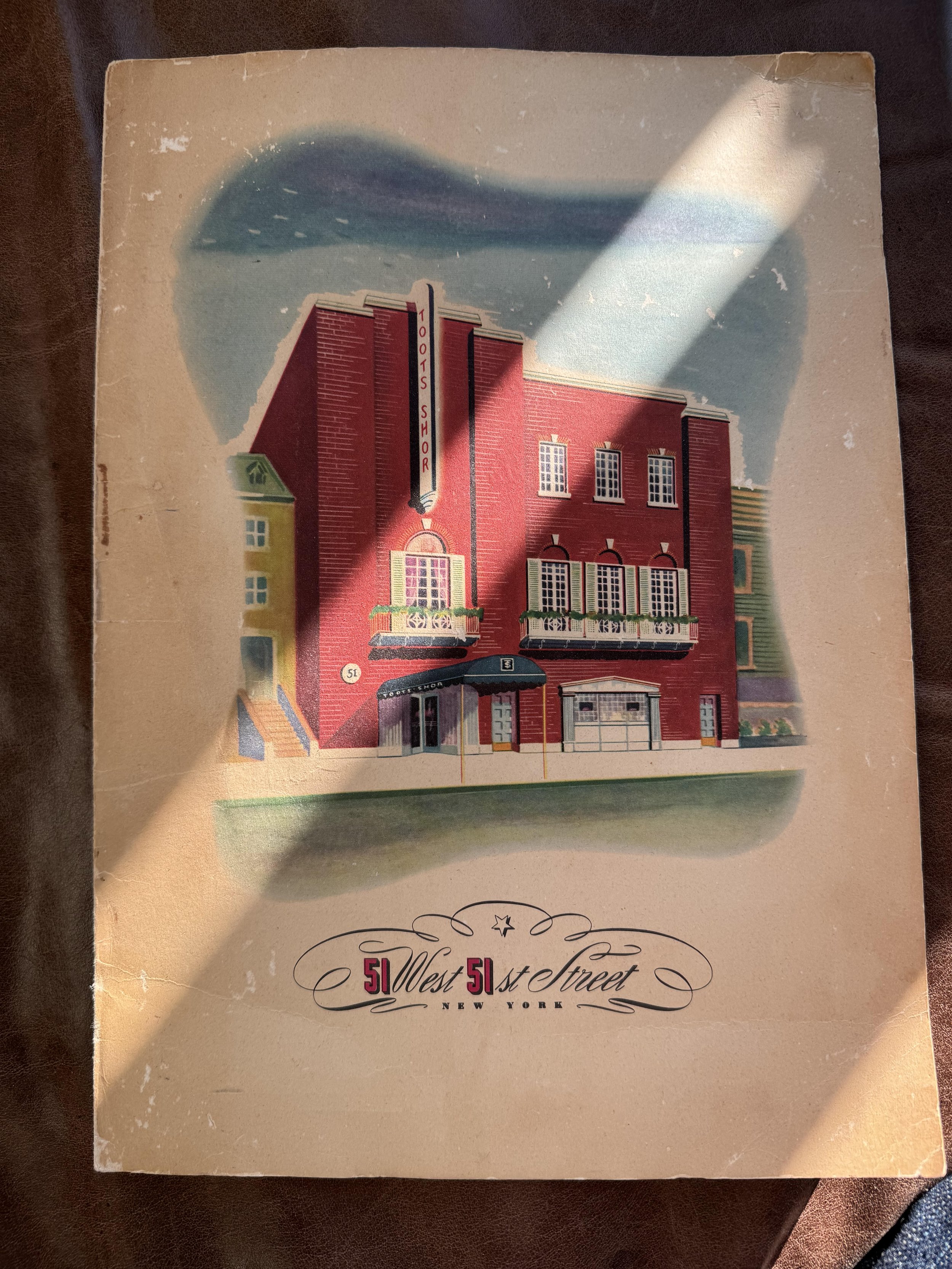
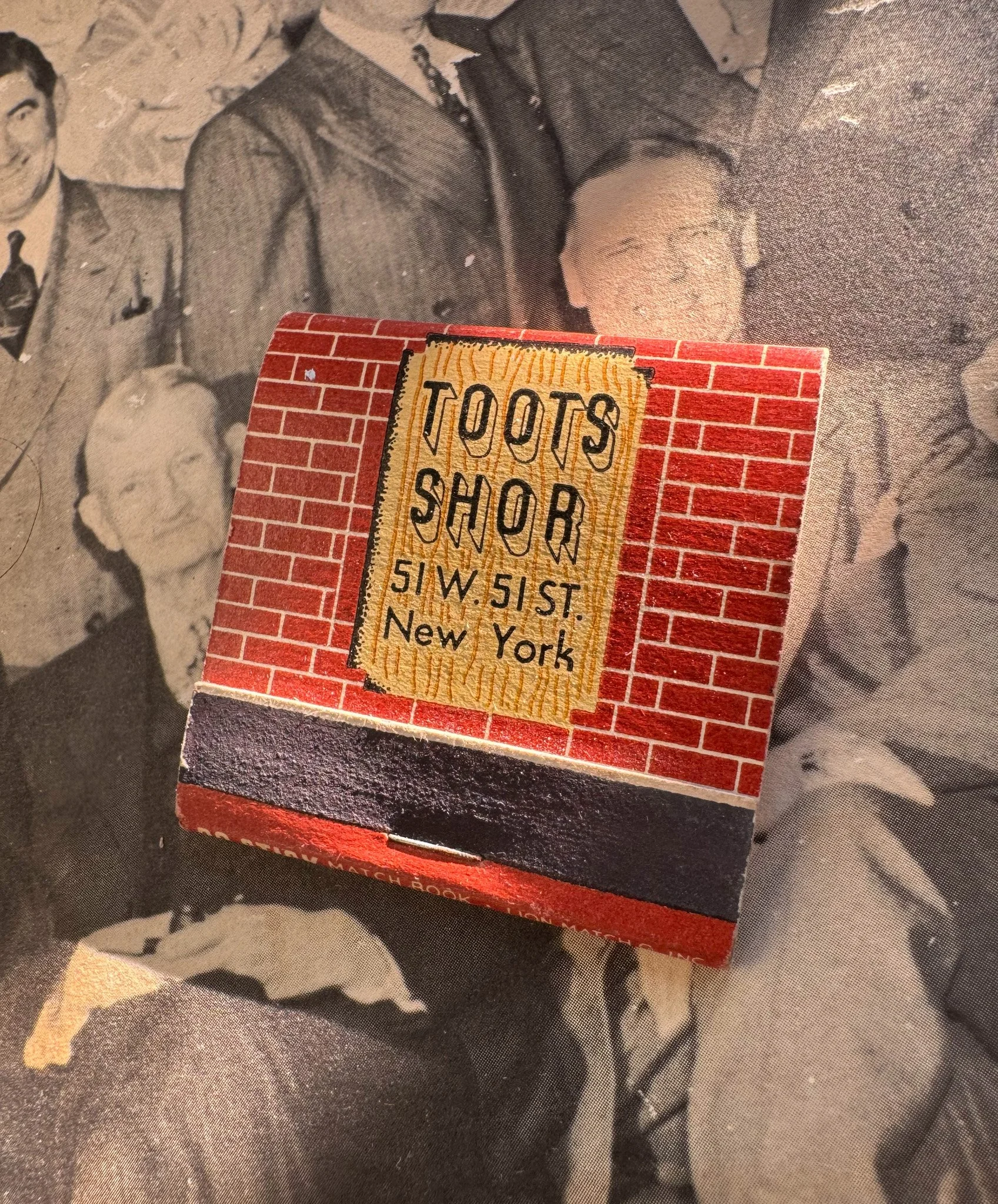
In the mid-century geography of Manhattan, the center of the world wasn't a landmark or a monument—it was a circular bar at 51 West 52nd Street. Toots Shor’s wasn't just a restaurant; it was a cathedral of "the big hello," a place where the social register was written in bourbon and the only sin was being on the outside.

If the Stork Club was for the tuxedoed elite and El Morocco was for the glitterati, Toots Shor’s was for the men who ran the city. It was a masculine, unapologetic space where the walls were oak and the portions were legendary. Toots himself, a man of formidable girth and even larger personality, presided over the room like a secular bishop.

He had a specific code: he didn't care how much money you had, he cared how you stood your ground. It was the ultimate leveler. You might find Joe DiMaggio at one table, Frank Sinatra at another, and the Chief of Police at a third—all of them treated with the same boisterous, affectionate insults. Before or after a sporting event, there wasn’t a more desirable seat than one at Shor’s circular bar.

Property of Getty Images

The nightlife of the 1950s operated on a different clock. The evening didn't begin until the final out was recorded at Yankee Stadium or the curtain fell on Broadway. Toots Shor's was the inevitable destination for the post-game post-mortem. It was a culture defined by the "three-martini lunch" that bled into a five-whiskey dinner.

The aesthetic was unmistakable: sharp gabardine suits, the blue haze of tobacco smoke, and the rhythmic clink of highball glasses. It was a time when a man’s reputation was built on his ability to hold his liquor and his word. There was a durability to the relationships formed at that bar—a sense that as long as the neon sign was humming outside, the world was holding its shape.

Toots famously said, "I don't want to be a millionaire, I just want to live like one." That sentiment fueled the entire era. It wasn't about the accumulation of wealth so much as the accumulation of moments. The 1950s Manhattan night was a curated experience of wit, sport, and camaraderie.

Today, the physical space at 51 West 52nd is gone, but the spirit of the "Shor’s" era remains a primary reference point for anyone who values thoughtful, classic design. It reminds us that the best environments aren't just about the furniture; they are about the quality of the company and the timelessness of a well-told story over a cold drink.

A series of unfortunate events (mostly comping more tabs than accepting payment for) led to Toots Shor closing forever in 1961.

"THE GRANDDADDY OF THEM ALL"

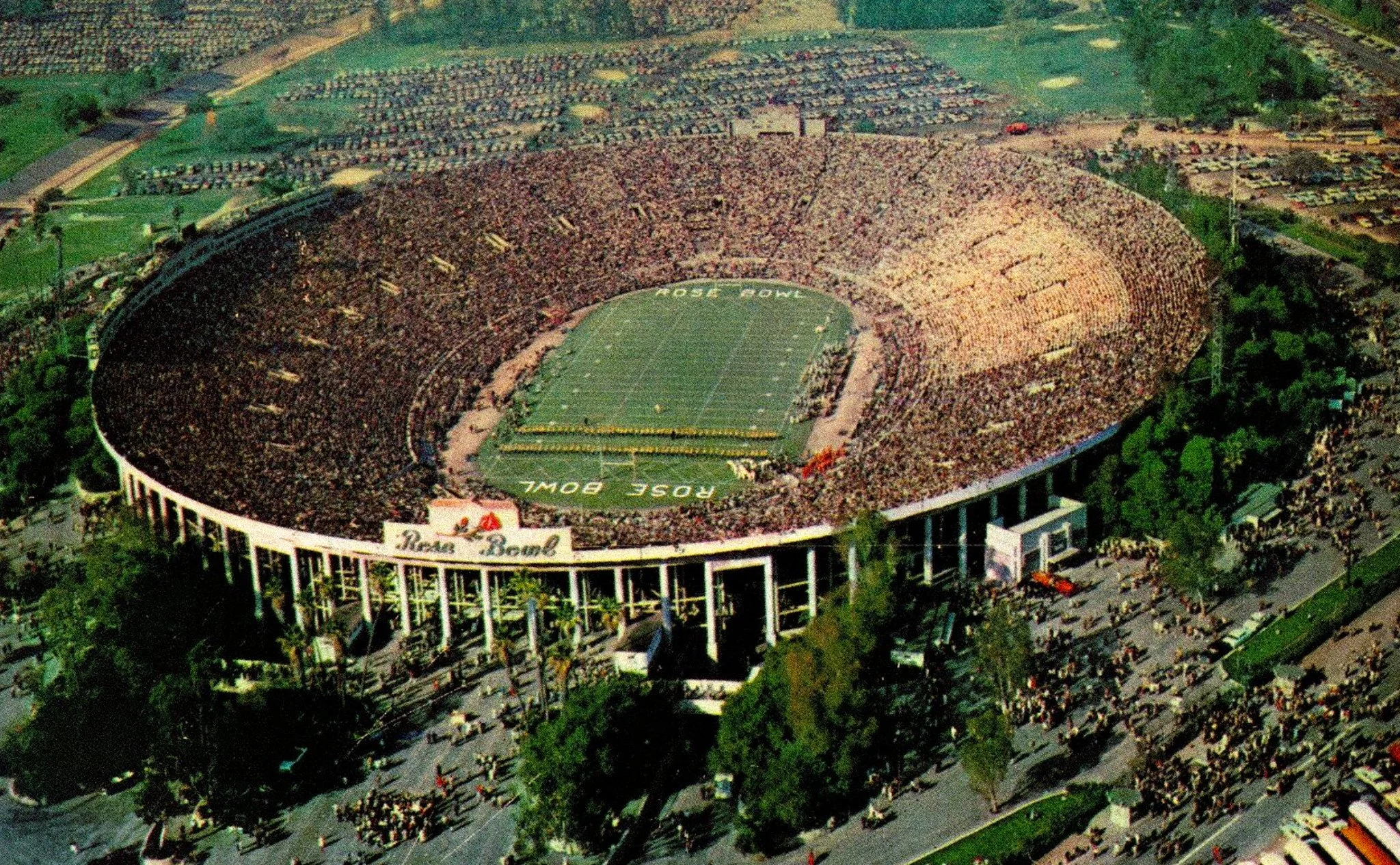
When people speak of The Granddaddy of Them All, they aren't just referencing a football game; they are describing a pilgrimage to an American cathedral. Nestled in the Arroyo Seco of Pasadena, the Rose Bowl Stadium remains one of the most storied venues in the history of global sport. It is a place where geography, architecture, and tradition converge to create an atmosphere that feels remarkably unchanged by the passing decades.

Designed by Myron Hunt and modeled after the Yale Bowl, the stadium opened its gates in 1922. Its iconic horseshoe shape was eventually closed in 1928, creating the massive, continuous bowl that provides its name.

What makes the Rose Bowl unique in the modern era is its structural honesty. In a world of glass-and-steel "smart" stadiums, the Rose Bowl is a testament to the durability of concrete and the elegance of the open air. Its low-slung profile allows the surrounding San Gabriel Mountains to serve as a natural backdrop, creating a "visual syllabus" of Southern California beauty that no high-definition screen can replicate.

The event itself is a cornerstone of American cultural history. Long before it became a postseason fixture, the Tournament of Roses was a way for Pasadena to showcase its “Mediterranean” climate to the rest of the country. The game is the centerpiece of a day-long ritual that begins with the floral artistry of the Rose Parade and culminates in the late-afternoon light that has become legendary among photographers and fans alike.

There is a specific quality to the "Golden Hour" at the Rose Bowl. As the sun begins to dip behind the canyon walls during the third quarter, the field is bathed in a warm, amber glow that signifies more than just a change in lighting—it signals the peak of the college football season.

In an age of disposability, the Rose Bowl Stadium stands as a monument to permanence. It is a reminder that some things are worth preserving precisely because they cannot be improved upon. Today, in addition to its sporting event hosting, the Rose Bowl is home to one of the best flea markets in the country. Buyers from many large brands including Ralph Lauren, Levi Strauss, send teams out to locate the best vintage pieces used to inspire new designs.

Happy New Year.

THE ROOF OF THE WORLD - 1953

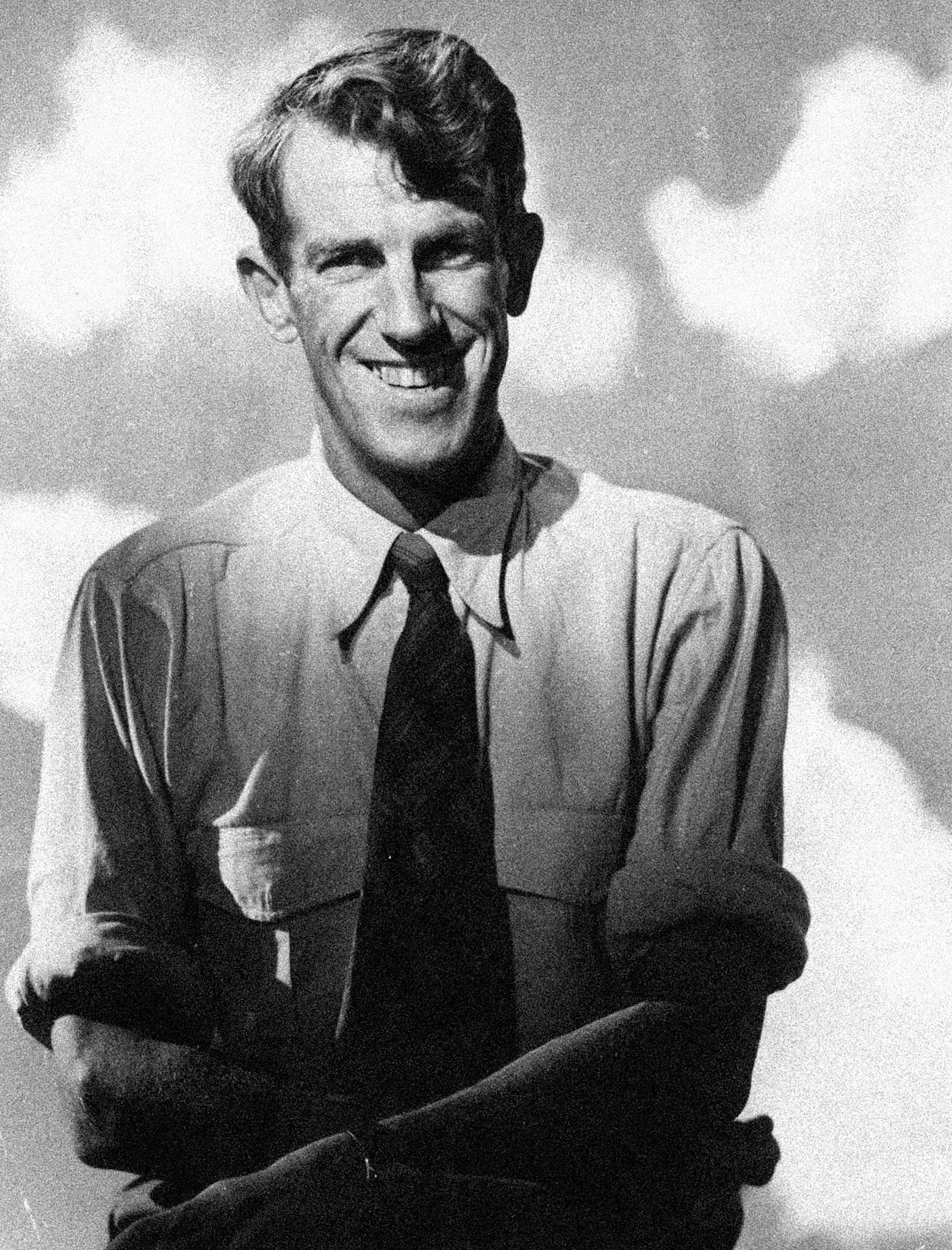
The ascent of Mount Everest by Sir Edmund Hillary in 1953 (although in 1953 he was not yet a sir) was not merely a feat of mountaineering; it was the closing of a chapter in the history of global exploration. At the center of this narrative was a soft-spoken beekeeper from New Zealand whose physical durability and quiet resolve became the blueprint for the modern adventurer.

Hillary in a three-button tweed jacket, at an appearance with Sherpa Tenzing following the expedition. Getty Images

By the early 1950s, Everest had attained the status of a "Third Pole"—the last great terrestrial prize. Previous expeditions had been defeated by the sheer logistical weight of the mountain and the physiological toll of the "Death Zone." Hillary’s advantage lay in his conditioning. Having spent his youth navigating the Southern Alps of New Zealand, he possessed a lung capacity and a mental grit that were perfectly suited for the thin air of the Himalayas.

In 1953, joining the British expedition led by John Hunt, Hillary found his perfect counterpart in Tenzing Norgay, a Sherpa with unparalleled high-altitude experience. Their partnership was a study in mutual reliance—a refusal to let individual ego compromise the structural integrity of the mission. Towering over the range that is referred to as the “Roof of the World”, Everest measures in at an imposing 29,032ft along the border of China and Nepal. As the tallest mountain in the Himalayas, Everest had tempted mountaineers since the 1850’s.

A look at the intimidating terrain of Everest.

The defining moment of the climb occurred just below the summit at what is now known as the Hillary Step. It was a forty-foot wall of rock and ice that stood as the final sentry to the peak. Hillary’s solution was a masterpiece in motion: he wedged his body into a crack between the ice and the rock, literally shimming his way up the face.

On May 29, 1953, at 11:30 a.m., they reached the summit. There was no grand speech or theatrical display. Hillary simply reached out to shake Tenzing’s hand, though the Sherpa famously opted for a hug. They stayed for only fifteen minutes—just long enough to take photographs and bury a few small offerings in the snow.

Photo Credits, Getty Images

What makes Hillary’s success so enduring is what he did with the fame that followed. He didn't treat the summit as a finish line, but as a foundation. He spent the rest of his life building schools and hospitals in the Himalayas, ensuring that his legacy was tied to the people of the region rather than just the height of the mountain.

Today, Everest is a different landscape, but the Hillary path remains the primary trail to the top. For those who value the intersection of grit and humility, his story is the ultimate syllabus. It reminds us that the most significant achievements are rarely about conquering nature, but about mastering one's own limitations through repetition, preparation, and a deep respect for the environment.

Hillary wore a Rolex ref. 6352, a model that would soon carry a tribute to him in its name; the Rolex “Explorer”.

Birdland

In the humid, summer air of mid-century Manhattan, 1678 Broadway was more than an address; it was the epicenter of a musical movement. Birdland, which opened its doors in December 1949, was named in honor of the man who had already dismantled the traditional architecture of jazz: Charlie "Bird" Parker.

To understand Birdland, you must understand the restless mind of Parker. He was a man who viewed the saxophone not as a instrument, but as a scalpel, and he was a surgeon. Along with Dizzy Gillespie and Thelonious Monk, Parker pioneered “Bebop”—a genre characterized by breakneck tempos, complex chords, and an improvisational vocabulary that demanded an unprecedented level of focus.

The front entrance to Birdland, located at 1678 Broadway Ave, in Manhattan’s Midtown neighborhood.

Parker’s brilliance was rooted in a refusal to be decorative. His solos were lean, jagged, and dense, functioning like a template for a generation of players who wanted to move beyond the predictability of the Swing Era. At Birdland, Parker found a venue that matched the intensity of his output and the appetite of those who attended.

Birdland sat down a flight of stairs, a basement sanctuary that could hold 500 people—though on any given night, it was double that. The layout contained a long bar, rows of tables draped in white linen, and a "bullpen" section where fans could sit for the price of a drink to watch them work.

Parker on the saxophone.

From those who describe it, the club was a masterclass in atmospheric design. It featured a distinct "birdcage" motif and an emcee, the diminutive and high-pitched Pee Wee Marquette, whose introductions became as much a part of the historical record as the music itself. Birdland wasn't just a place to hear music; it was a snapshot from what would become a historic image of post-war New York.

"Greetings From Havana."

In February 1962, the United States was on the precipice of formalizing the Cuban trade embargo. Before the President could put pen to paper on the executive order that would sever ties with the island for decades, he issued a specific, urgent command to his Press Secretary, Pierre Salinger.

The mission was simple but daunting: Kennedy needed as many H. Upmann Petit Coronas as he could find by the next morning. Salinger, a man who understood the "big hello" of Washington life, spent the night scouring every humidor in Washington. When he walked into the Oval Office the following morning and confirmed the successful haul, 1,200 cigars. Kennedy reportedly smiled, opened his desk drawer, and signed the embargo into law.

Kennedy’s choice of the H. Upmann Petit Corona was a reflection of his broader sensibilities, devoid of unnecessary flourish. While many of his contemporaries favored the massive, imposing "Churchill" vitolas, JFK preferred a smaller, unimposing cigar. The Petit Corona offered a refined profile that fit the brisk pace of the man leading the United States through a tumultuous period in history.

Whether he was photographed on the deck of his sailboat the “Honey Fitz” or leaning over a map in the Cabinet Room, the presence of the cigar served as a marker of Kennedy’s composure. It suggested that despite the weight of the world, he could still find a moment for himself.

Jack Kennedy smoking his favorite, H.Upmann Petit Upmann.

A Field Guide to the Birds - Peterson

A gift to my grandfather on the occasion of his 40th birthday. It was given to him by my grandparent’s close friends. He passed away when I was two and a half years-old.

This initial post is a tribute to the faint memories I have of him, as I am now just slightly older than he was when he received this book. I hope he would’ve enjoyed Navigator Archive.

A Field Guide to the Birds was orginally published in 1934.