
My first real job—outside of a paper route—was as a sports writer for that very same newspaper. For quite some time I thought that was what I wanted to do with my work life. This was before the advent of the internet as the primary news source and before I learned how little sports reporters made.
One of the early events I covered was tennis. While hardly as glamorous as the era and athletes covered here I still enjoyed it a great deal.
There was a time when the tennis was played at a different tempo, dictated entirely by the weight of the wood racket in a player’s hand. Before tennis became an exercise in ballistic force, it was a discipline of a well placed ball and fundamentals.
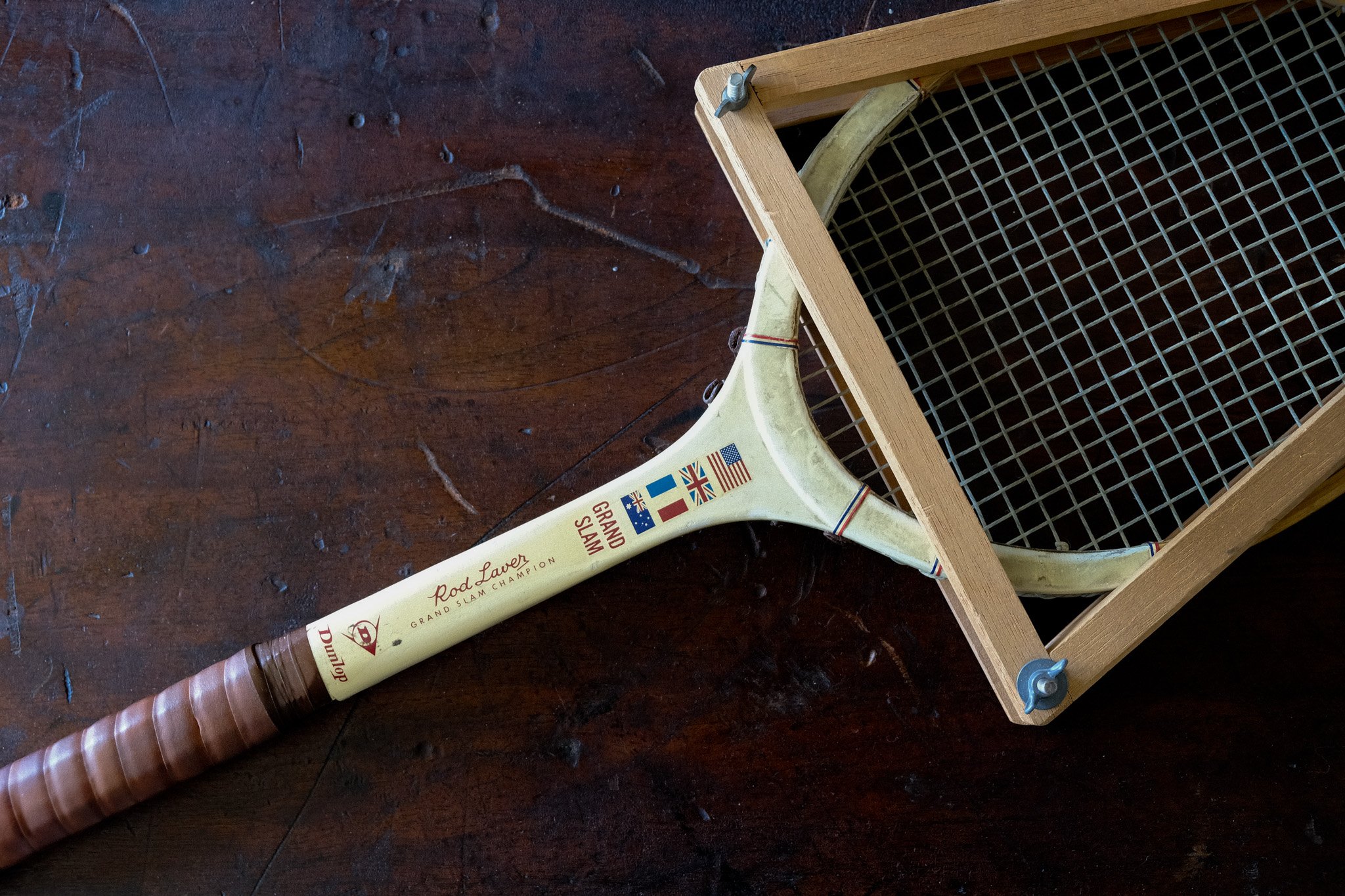
“This is the grip that Rod Laver used. Are you familiar with Laver?” - Richie Tenenbaum
At the center of that world stood Wimbledon, a place of rye-grass and an unyielding white canvas. To see the Center Court at SW19 in July then had to feel like looking at a landscape of strict aesthetic borders. The grass was trimmed to a precise fraction of an inch, the lines were chalked by hand, and the spectators sat in the covered stands clad in linen and club blazers. The court itself was alive; it changed color over the duration, wearing down from a rich, deep green to a dusty, brown as the spikes of the players tore the turf.
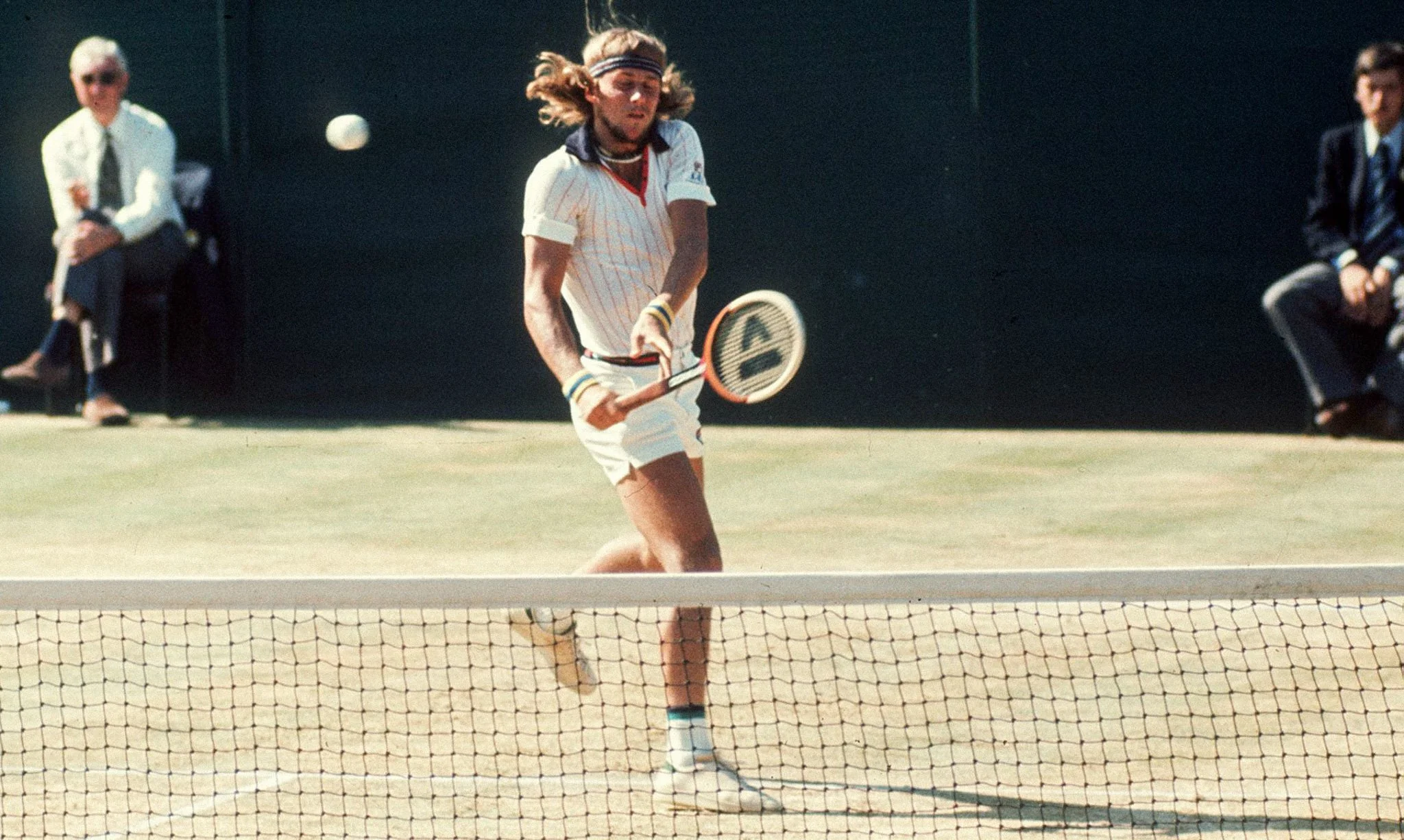
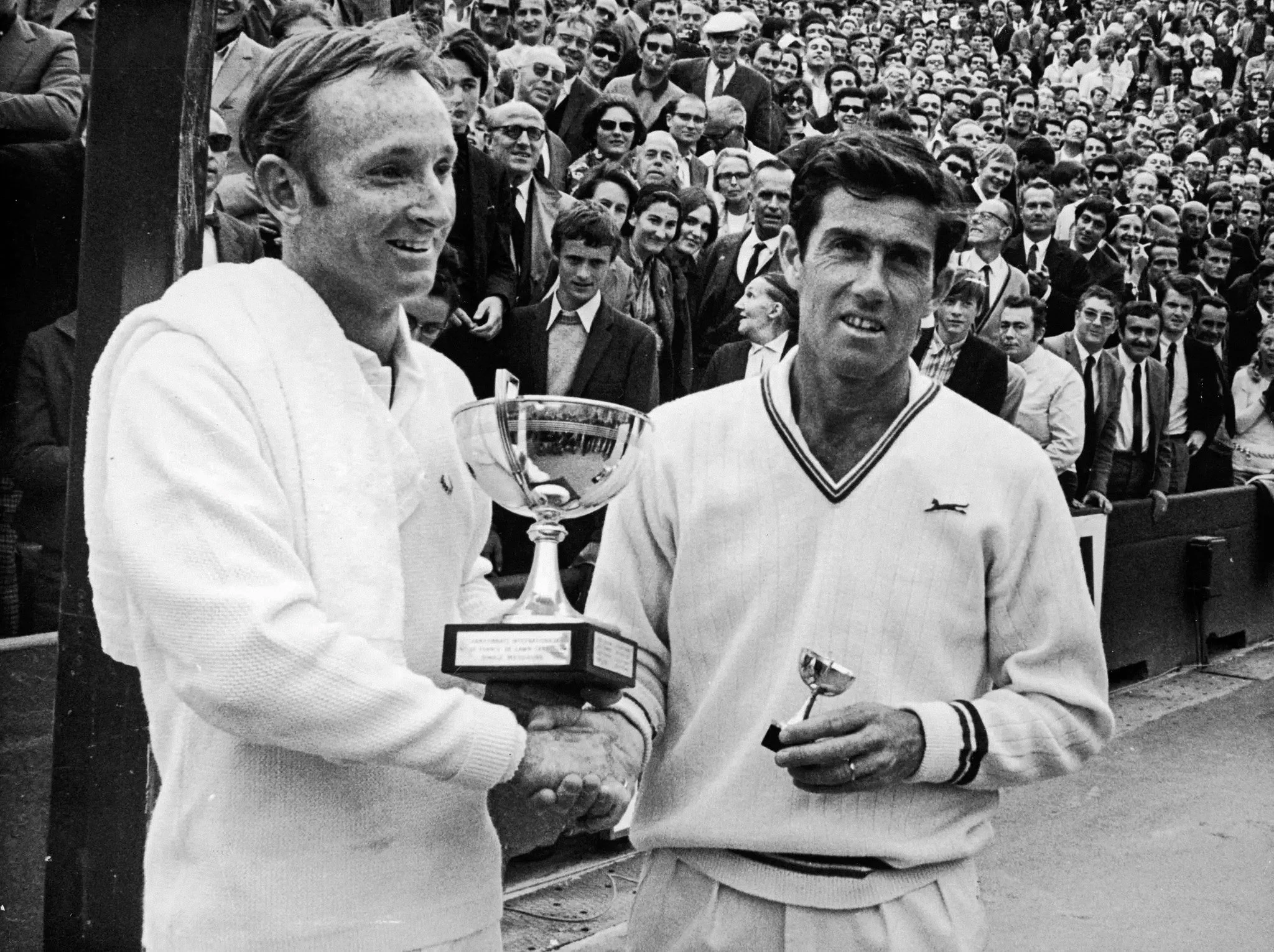
On that shifting surface, the game belonged to a generation of men who treated athleticism as an extension of good form. There was Rod Laver, the quiet left-hander from Queensland, whose forearms were built from years of wrestling heavy timber frames through the humid air. Laver moved across the lawn with a clipped, economical grace, using a flick of his wrist to drop the ball precisely where the low-skidding grass would render it unreachable. A decade later, Björn Borg would anchor himself to those same baseline brown patches, his long hair held back by a headband of Fila branded terrycloth. He uncoiled a heavy, looping topspin that seemed to defy what a wooden racket was engineered to do.
The weapons of that era required an accuracy that modern graphite has rendered obsolete. Whether it was the Dunlop Fort favored by the traditionalists, the Wilson Jack Kramer, or the pale, laminated ash of Borg’s Donnay, these rackets were close cousins to wood furniture. The racket heads were small, not much larger than an open palm, leaving no margin for error. If you struck the ball an inch outside the sweet spot, the vibration traveled directly into the bone of the wrist. Players strung their frames themselves, pulled to tight tensions that hummed like violins. The wood was susceptible to the weather; a humid afternoon could warp a frame, and players stored them in heavy wooden presses, tightened down with wing nuts, to keep the heads true.
There was a functional elegance to the clothing that moved across the lawn. Sportswear had not yet been overtaken by synthetic meshes, high-tech plastics, or loud, corporate branding. It was an age of heavyweight cotton piqué, cream-colored cable-knit sweaters that carried the weight of real wool, and shorts tailored with the discipline of trousers. Fred Perry and René Lacoste designed these clothes to solve the practical problem of moving freely on a hot day, and the result was a uniform that looked just as correct on a London train as it did on the court.

When you look back at old films of those tournaments, the sound stays with you. There is no high-pitched screech of sneakers on hardcourt or the hollow, metallic pop of a composite frame. There is only the low, rhythmic thwack of a ball meeting the racket, followed by the soft slide of canvas shoes on wet turf. It was a harder game to play well, but it was a more human one to watch.