
I visited the Chateau Marmont on my first trip to Los Angeles 20 years ago. Having first learned about its many over-told tales of Hollywood’s Golden Era and the excess that it spawned, it seemed like a window into another time.
A rainy Saturday night I parked across Sunset Blvd and crossed the street. I walked up the nearly pitch black driveway and past a valet who asked if I needed help getting to where I was going. The incredible lobby was like a castle lit by incandescent lighting that felt more like candlelight. This is not exaggerated, it has a feel like no where else I have been. The servers and staff are aloof in a way that almost feels oddly intentional. This surprisingly carries with it its own level of charm. The paint throughout is a perfect off-white, of which I have never seen an equal. A similar compliment can be said of the breakfast.
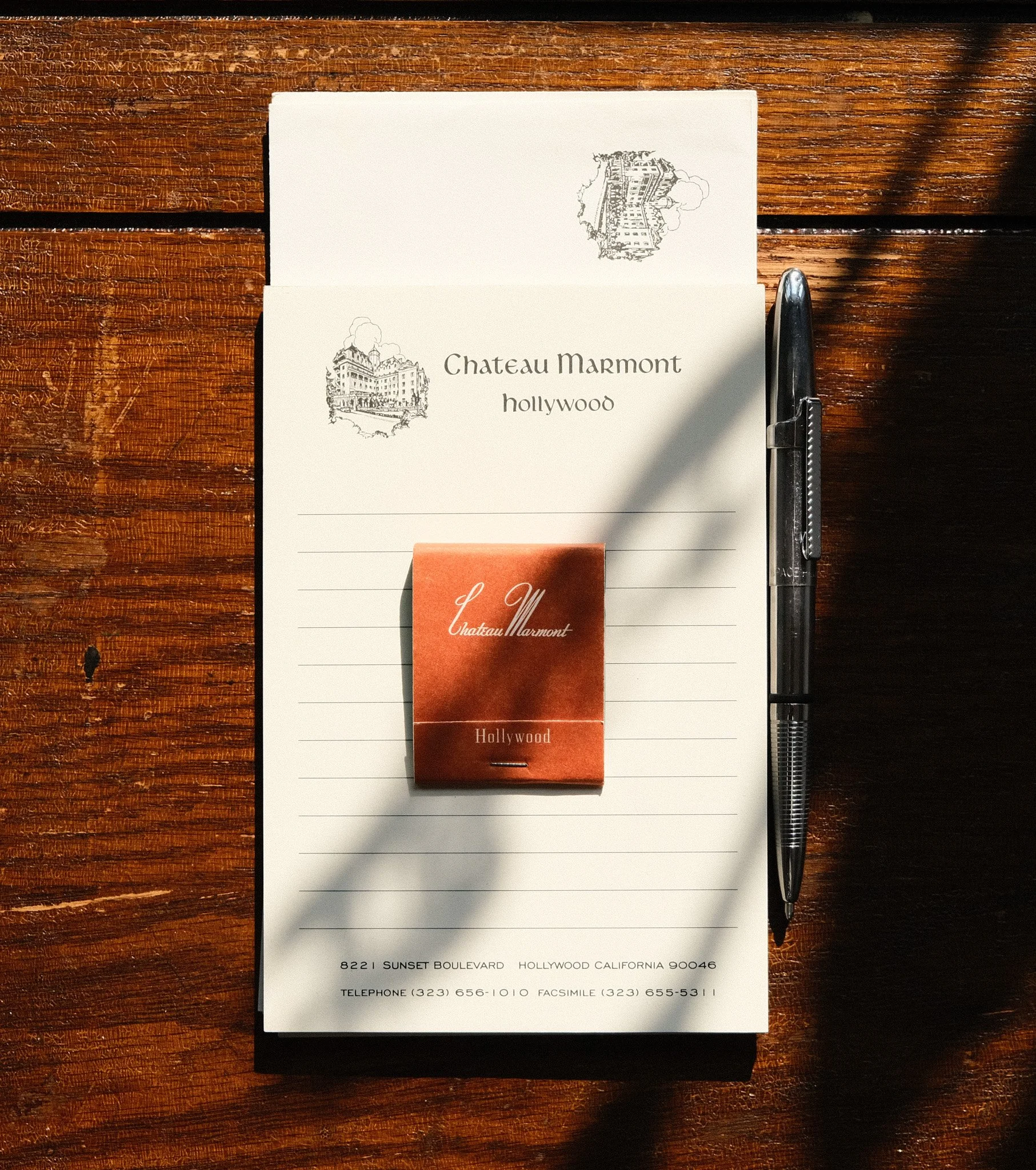
Before it became known for debauchery, the Chateau Marmont was built to be an escape from the town around it.
By the late 1920s, Los Angeles was growing fast. The movie business had turned from a small collection of filmmakers into a massive studio system. Developers were quickly building up Sunset Boulevard. Amidst this boom, when a Los Angeles lawyer named Fred Horowitz decided to build something completely different. He decided to construct an apartment building that looked like a castle more at home in the French countryside than in Hollywood.
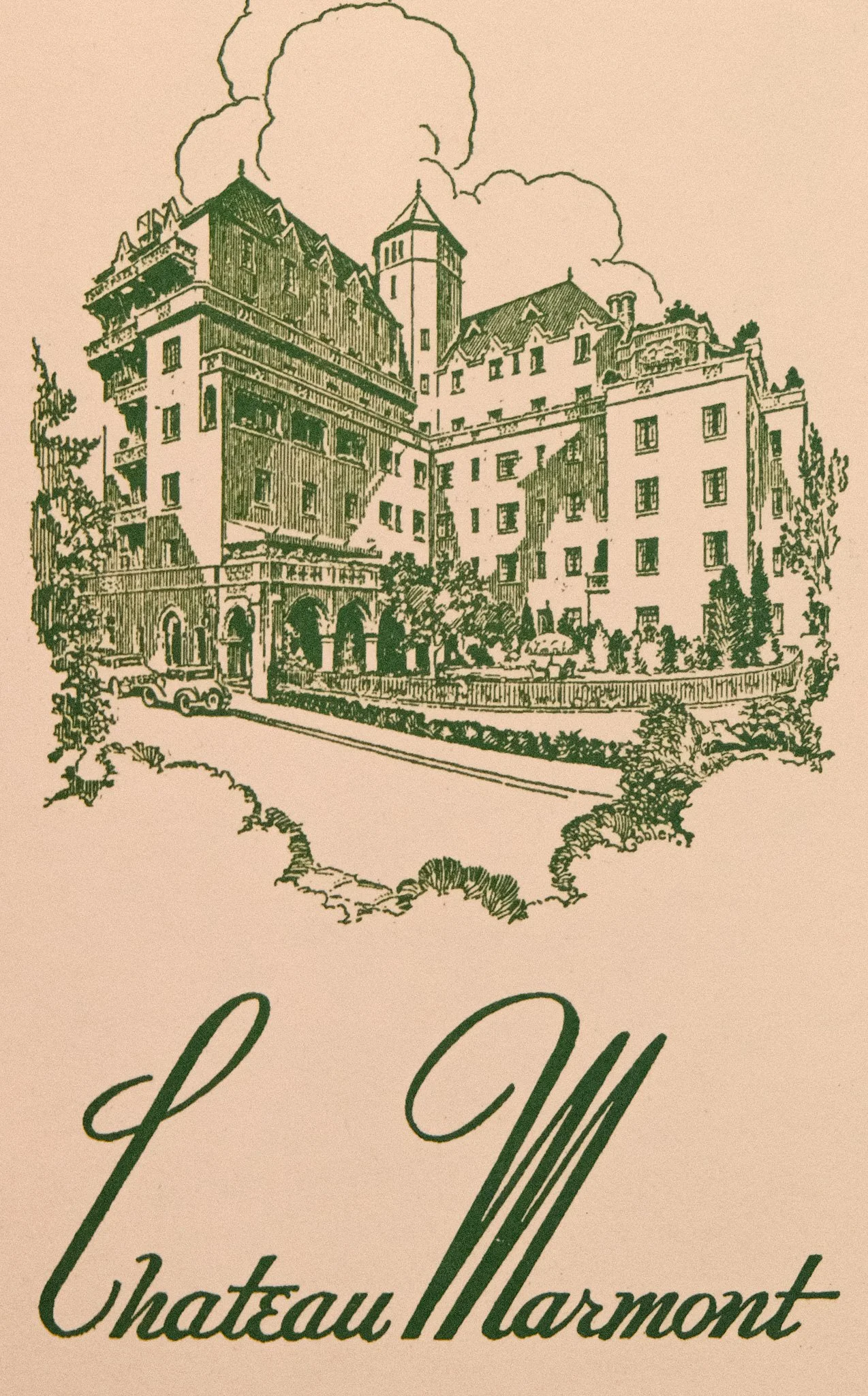
The Original Letterhead Logo.
Horowitz traveled to France for inspiration and returned to LA with a blueprint for a fortress. He picked a steep, quiet hill at the edge of Laurel Canyon. At the time, the spot sat just outside the official boundary of the Los Angeles Police Department—a detail that would come into play in the future.
The Chateau opened in February 1929 as the city’s first luxury, earthquake-proof apartment complex. Built with thick poured concrete and plaster walls, it was designed to block out noise and neighbors. It also offered total privacy. A single entrance led straight to an underground garage, meaning residents could take the elevator directly to their rooms without ever walking through the lobby.
The apartments had high ceilings, arched windows, and views of the valley. But the timing was not ideal. A few months after it opened, the stock market crashed. By 1931, the property was sold to Albert E. Smith, a silent film pioneer. Smith converted the apartments into hotel suites, brought in antique furniture, and let the trees grow high and thick around the property.
The hotel's golden age was defined by this clever design. During the 1930s and 40s, movie studios controlled their actors' lives completely. Contracts had strict behavior rules, and gossip columnists had spies everywhere. If an actor was seen with the wrong person at a Hollywood hotel, their career could be over the next day.
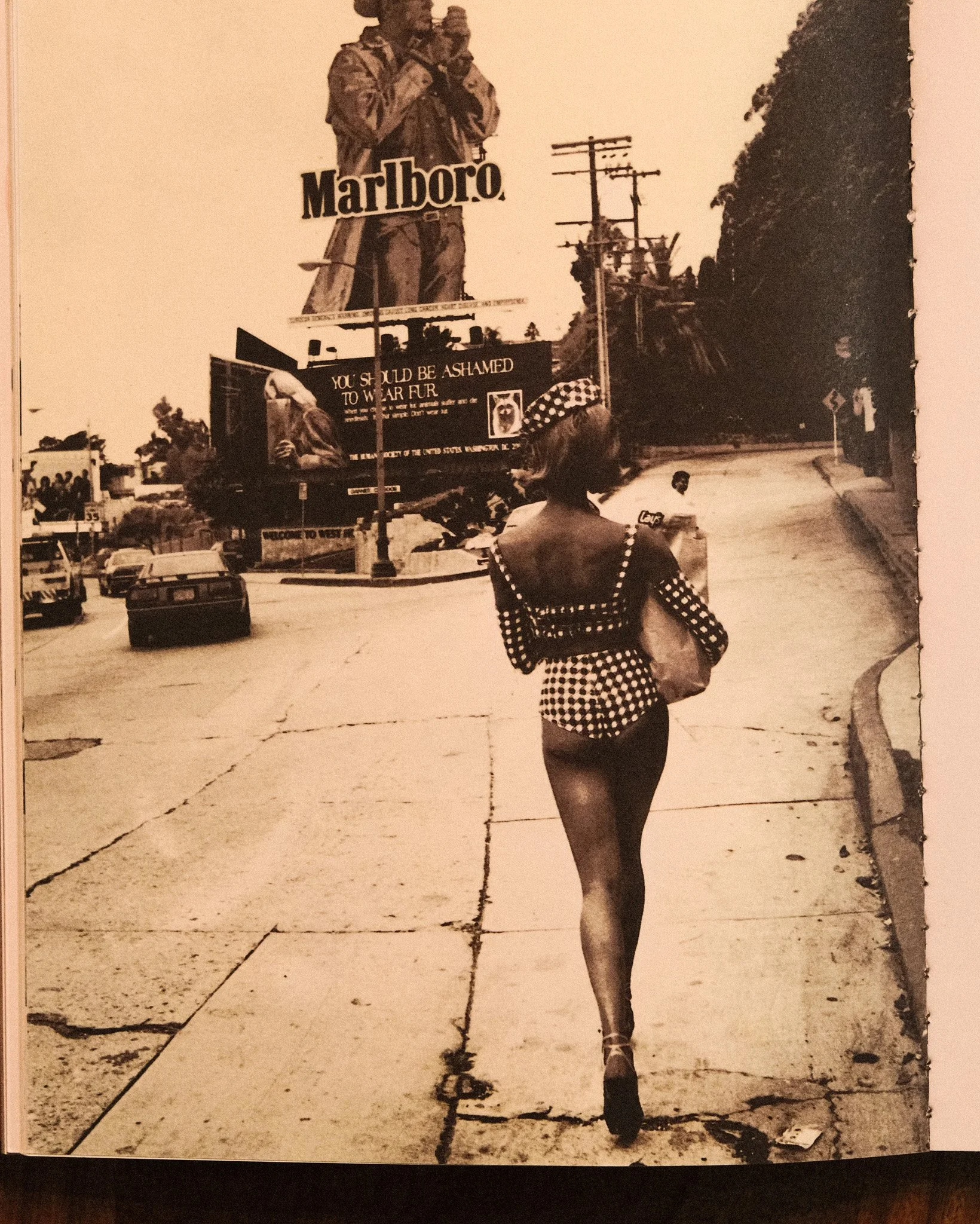
Naomi Campbell on a grocery run.
The Chateau was different. Thanks to the thick concrete walls, sound didn't travel between rooms. Thanks to the garage, people could come and go without being seen. The staff also kept secrets perfectly. Studio bosses started sending their actors there whenever they needed them to stay out of the public eye. That same idea stayed in place for decades and is still in place somewhat today. A celebrity can still avoid attention there, as the staff will make sure they are unbothered. There has always been somewhat of a no photography rule at Marmont.
It became a place for long stays for some and quick trips for others. Greta Garbo lived there in near total seclusion. Montgomery Clift spent weeks in Room 61 recovering from a bad car accident in 1956, completely hidden from reporters. Writers like F. Scott Fitzgerald sat in the courtyard for hours, using the quiet space to work on screenplays.
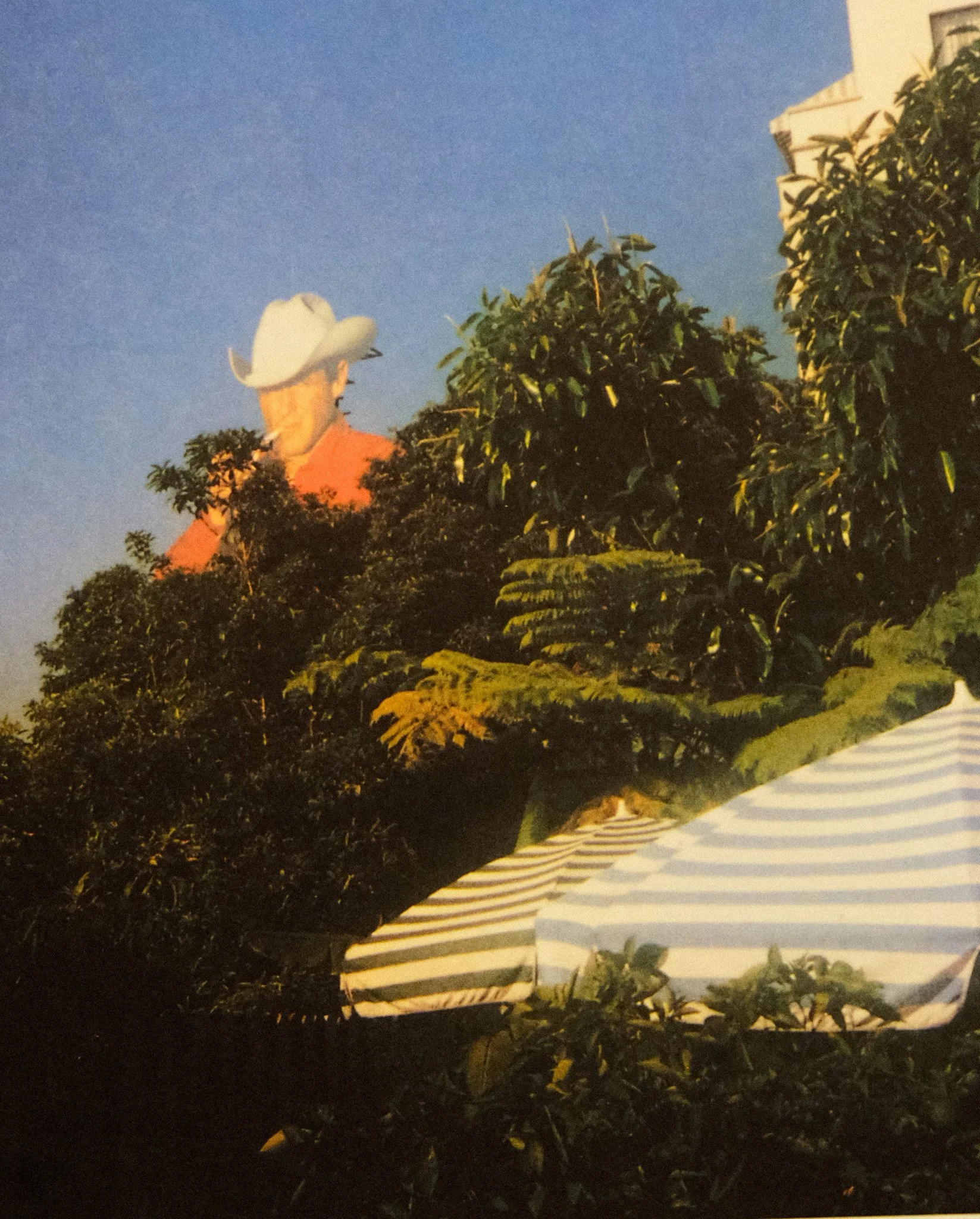
MM keeping watch.
When you look at the Chateau Marmont from the street today, it still looks out of place, a white castle sitting on a California hill. Its history is in the silence it provided when early Hollywood was at its busiest. It was built to keep the outside world out, and for a long time, it has done exactly that.
I would recommend staying there at least a night or two. The pool and outdoor areas are worth the cost of a room alone.